Author: kieran

  • Crossing Switzerland 2026

    by Gavin Peach

    400km Across the Alps:

    From Bad Ragaz to Montreux

    Introduction: Five Runners, One Alpine Monster
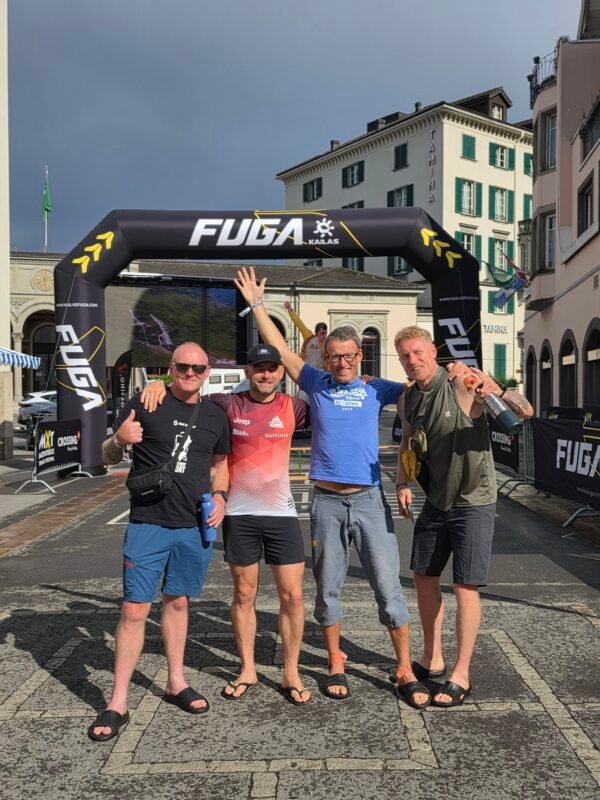
    On Sunday 19th July 2026, five runners stood on the start line in Bad Ragaz, in the far east of Switzerland, looking ahead at one of the biggest challenges any of us had ever taken on.

    Ahead of us was Crossing Switzerland — a journey across the entire width of Switzerland, travelling from Heidiland in Bad Ragaz to Montreux, on the shores of Lake Geneva, finishing beside the famous Freddie Mercury statue.

    The statistics alone were intimidating:

    400km
    Over 25,000 metres of elevation
    Six days through the Swiss Alps

    The route crossed some of the most spectacular and demanding terrain in Europe, following a line from the eastern Alps to the western edge of Switzerland.

    Standing together at the start were:

    • Myself
    • Dave Gillen
    • Dale Restorick
    • Tim Wiggins
    • Martin Wilson

    We all arrived with different experiences and different reasons for being there.

    Tim had already completed Swiss Peaks, so he knew the unique challenge of spending days crossing the Alps on foot.

    Martin also had significant endurance experience and was ready for the challenge ahead.

    Dave and Dale were stepping into a completely different world. Dale had previously completed a 50km ultra at UTS, but nothing remotely close to the scale of what was waiting for us.

    That was one of the fascinating things about these races.

    At the start line everyone looks the same.

    Everyone is excited.

    Everyone believes they are ready.

    But over 400km through the Alps, the mountains gradually reveal what you are truly capable of.

    Having completed Swiss Peaks 360 previously (380km after route changes), I knew exactly how brutal a Swiss alpine ultra could be.

    Crossing Switzerland was another huge adventure.

    Not easier.

    Not harder.

    Just different.

    Both races were absolutely brutal in their own way.

    Before we started, the race organisers gave us one important instruction:

    Follow the Via Alpina signs.

    The majority of the route followed Switzerland’s famous long-distance Via Alpina trail. For sections where the race left the official Via Alpina route, flags had been placed to guide runners in the correct direction.

    It was a simple navigation system for a very complicated journey.

    The goal was simple:

    Reach Montreux.

    Everything between Bad Ragaz and Lake Geneva would have to be earned.

    Chapter 1: The Start – Bad Ragaz to Rüti

    A Brutal Introduction

    The adventure almost went wrong before it even began.

    My journey into Switzerland started with a dramatic flight into Geneva.

    A huge thunderstorm was hitting the region, creating chaos across the airport. Many flights were cancelled or diverted, but somehow ours managed to weave its way through the storm and land safely.

    I felt incredibly lucky just to arrive.

    After travelling onwards to Bad Ragaz, the night before the race did not produce the ideal sleep.

    I started Crossing Switzerland tired.

    However, compared with Swiss Peaks, I did feel slightly fresher.

    That was important because I knew one of the biggest battles over the coming days would not simply be the climbing or the distance.

    It would be sleep.

    The race started and immediately reminded us what type of adventure we had signed up for.

    The route headed through the spectacular Tamina Gorge, before climbing relentlessly towards Pizolhütte.

    There was no gentle introduction.

    The opening climb gained around 1,800 metres, and conditions made things even harder.

    Heavy rain arrived, turning sections of trail into slippery, technical descents.

    On one of the early descents, I caught my foot and fell, cutting open my knee.

    Thankfully, it was not serious, but it was not the ideal start.

    The mountains had already delivered their first warning.

    Pay attention.

    The first section was huge:

    78.5km
    5,357m of ascent

    before reaching Life Base 1 at Rüti.

    Arriving there, my plan was simple:

    Sleep.

    After Swiss Peaks, I had learned that sleep deprivation could become as dangerous as physical fatigue.

    I wanted to be smarter this time.

    Unfortunately, my body had different ideas.

    Despite being exhausted, I struggled again in the large dormitory.

    The problem was familiar:

    People arriving.

    People leaving.

    People talking.

    People moving around.

    My brain refused to switch off.

    The frustrating thing was that during both Swiss Peaks and Crossing Switzerland, my best sleep always came in very specific circumstances:

    A quiet room.

    Only one other person.

    No snoring.

    No talking.

    No constant movement.

    At Rüti, that was not the situation.

    By this point, Tim Wiggins and Martin Wilson had moved ahead after I stopped longer at an aid station to get food.

    I ended up spending much of this first section with Alex Lunghi.

    Alex made a decision that, looking back, was probably the right one.

    Instead of staying at Rüti, he continued onwards to Klausen, where proper beds were available.

    I attempted to rest.

    Three hours passed.

    Very little sleep happened.

    Eventually, I accepted that lying there was no longer helping.

    Even if I could not sleep, moving was better than wasting more time.

    So, in the middle of the night, I headed back into the darkness.
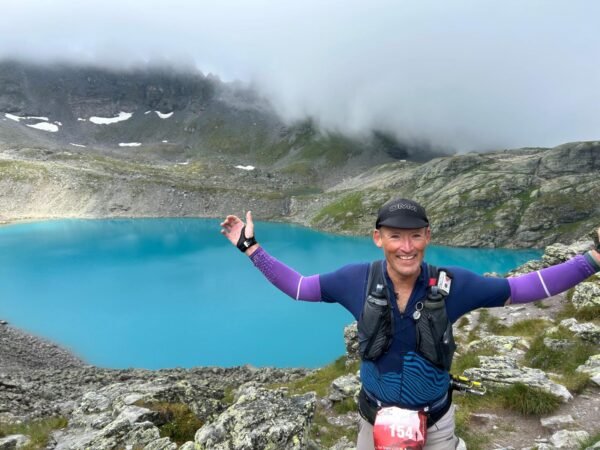
    Day 1

    Chapter 2: Rüti to Altdorf

    The First Battle With Sleep

    The route towards Klausen was much tougher than expected.

    The trail climbed through endless forest switchbacks.

    It was dark.

    I was exhausted.

    And I was alone.

    At some point, I decided to put some music on.

    Completely randomly, Lenny Kravitz – “It Ain’t Over ’Til It’s Over” started playing.

    The timing felt perfect.

    At around 4am, climbing through the darkness, already tired and questioning how long the journey would take, the message was exactly what I needed.

    Keep going.

    Even at this early stage, I had already started telling myself:

    “By Friday this will be over, and you’ll be relaxing in a B&B in Montreux.”

    That became the motivation.

    Not the next checkpoint.

    Not the next climb.

    The finish.

    Montreux.

    Eventually, daylight arrived and I reached Klausen.

    There I found Alex again.

    The difference was obvious.

    He had managed around four hours of proper sleep and looked full of energy.

    I was still fighting the effects of another almost sleepless night.

    Alex moved ahead again as we continued towards Life Base 2 at Altdorf.

    Along this section I also bumped into Jonas Borgartz, who I had met during Swiss Peaks.

    It was great seeing another familiar face from a previous Swiss adventure.

    Jonas was with a friend, and we shared some conversation before continuing.

    Unfortunately, this race would not end how he hoped.

    He would eventually have to withdraw.

    The route continued through the mountains towards Altdorf.

    When I arrived, I tried again.

    Another three-hour sleep attempt.

    Another failure.

    The body was exhausted.

    The mind refused to cooperate.

    By the time I had eaten and accepted that sleep was not happening, it was late afternoon.

    Time to move again.

    Chapter 3: Surenenpass, Engelberg and the Night Shift

    Finding the Tribe

    Leaving Altdorf after another failed sleep attempt, I headed back into the mountains.

    The next section immediately involved another steep climb, this time winding through forest trails. The combination of tiredness and the relentless climbing was beginning to build, but gradually the trees opened up and the landscape became more alpine.

    I climbed towards the snow line and into one of the most spectacular and remote-feeling areas of the race:

    Surenenpass – 2,292m

    This was one of those sections where the scale of the landscape reminded me why I kept coming back to these events.

    The mountains felt enormous.

    The terrain felt wild.

    Wildlife was everywhere, with the area frequented by marmots and ibex.

    It felt less like a race route and more like a journey through the heart of the Alps.

    After refuelling at the small Blackenalp aid station, darkness began to arrive.

    I switched on my headtorch and started the descent towards Engelberg.

    As I left the aid station, one of the volunteers gave me some advice:

    “The hard part is getting up and going again.”

    She was absolutely right.

    In these races, stopping is often harder than continuing.

    Once your body settles, convincing yourself to put your pack back on and walk back into the mountains can be one of the biggest mental battles.

    Arriving in Engelberg, I crossed paths with several runners who would become a huge part of my Crossing Switzerland experience.

    There was:

    • Sophie Littlefair
    • Timm Dunker
    • Joe Balcken
    • Simon Wullimann

    All of us had crossed paths earlier in the race, but from this point onwards we would spend significant time together.

    There was also Marco Leuenberger, a Swiss runner who joined us for sections through the night.

    When I arrived, Sophie was lying down on a tiny sofa.

    She looked at me and said:

    “There’s a sofa there that’s got your name written all over it.”

    She was not wrong.

    I lay down for around twenty minutes to recharge before getting up and refuelling.

    Sophie, Timm, Joe and Simon were still there, and we all decided to head out together into the night towards Melchsee-Frutt.

    After days of exhaustion, limited sleep and some questionable aid station food combinations, this group became one of the best parts of the race.

    Shared suffering creates friendships very quickly.

    The first part of the night involved more steep switchback forest climbs.

    Sophie and Timm moved ahead with Joe and Simon, while Marco and I stayed slightly behind.

    Near the top of the first climb, we caught Joe and Simon again.

    However, Simon was really struggling with stomach issues.

    There was an indoor area at the top of the climb, so Joe and Simon decided to stop and rest there until Simon felt able to continue.

    Unfortunately, despite battling on for some time afterwards, his stomach problems would eventually force him to withdraw from the race.

    The second climb continued upwards.

    The gradient eased slightly, but my biggest challenge was no longer just the terrain.

    It was sleep deprivation.

    At this point my tiredness had reached another level.

    My brain was starting to play tricks.

    As I climbed through the darkness, I began hallucinating.

    I saw Crossing Switzerland sew-on badges scattered across the trail.

    They looked completely real.

    I actually stopped and tried to pick one up.

    Instead, I was holding stones.

    That was probably the clearest sign yet that my body desperately needed rest.

    I found a flat piece of rock and told Marco I needed a power nap.

    I lay down for around five minutes.

    At over 2,000 metres, around 4am, it was far too cold to stay still for long.

    But even that short break seemed to help.

    The descent towards Melchsee-Frutt was one of the hardest sections mentally.

    I was completely exhausted.

    Every step felt slow.

    The terrain was not necessarily the most difficult, but the lack of sleep made everything feel amplified.

    Eventually, I arrived.

    The aid station offered food, but after such a demanding night it was disappointing.

    I had a small bowl of lentils with a tiny portion of processed sausage.

    It was not enough fuel for what we were asking our bodies to do.

    However, there were mattresses available.

    Because it was early morning, around 5–6am, the dorm was relatively quiet.

    I managed a short power nap of around thirty minutes.

    It was not perfect.

    But strangely, that short sleep was more beneficial than the previous occasions where I had spent three hours lying awake.

    Sometimes in these races you learn to take whatever recovery you can get.

    I bumped into Sophie and Timm again, and we decided to continue together for the next section.

    The plan was to tackle the final climb and the long descent towards Meiringen Life Base.

    Before leaving, we checked the tracker and saw that Joe and Simon had only just left the point where we had last seen them.

    Again, it showed how quickly things changed.

    One minute you are together.

    The next, everyone is fighting their own battle.

    The descent towards Meiringen reinforced something that would become a major theme of Crossing Switzerland:

    The descents were brutal.

    The climbing was physically demanding, but the descents punished tired legs, tired feet and tired minds.

    Eventually, we made our way down towards Meiringen.

    Chapter 4: Meiringen and the Jungfrau Region

    A Glimpse of Normality

    When I arrived at Meiringen, I went into the aid station.

    However, I did not realise immediately that Sophie and Timm had gone outside to meet Timm’s girlfriend Fenna, who had arrived with some extra food.

    The food inside the aid station was actually better than expected — I think it was meatballs — and after eating I decided to try another sleep attempt.

    Once again, I aimed for around three hours.

    Once again, it did not happen.

    The daylight, noise and activity made sleeping almost impossible.

    Instead, I decided to try something else.

    A massage.

    This was my first massage of the race.

    I asked them to focus on the arch of my left foot, which had been a long-standing issue.

    Thankfully, it helped a lot.

    At this stage, any improvement was valuable.

    Sophie and Timm, who had been sleeping outside near Fenna, left before me.

    Shortly afterwards, Joe and Simon arrived.

    Simon was still struggling and went to speak with the race team to see if there was anything they could do to help.

    The next section led into the Jungfrau region, and suddenly the mountains became even more spectacular.

    The scale increased dramatically.

    The peaks became larger.

    The valleys became deeper.

    The scenery became more dramatic.

    After the massage and finally having some decent food, I was feeling better.

    For the first time in days, I was able to look around and properly appreciate where I was.

    The route climbed towards Grosse Scheidegg – 1,962m.

    Unfortunately, clouds blocked the famous views of the Eiger, Mönch and Jungfrau.

    But the landscape was still incredible.

    Following the Reichenbach River, the route passed the famous waterfall where Sherlock Holmes supposedly met his demise during his battle with Professor Moriarty.

    It was another reminder that this race was about more than distance.

    We were travelling through places full of history and character.

    Eventually I arrived at the aid station just outside Grindelwald.

    I had noodles and boiled eggs before Sophie called me over to Timm and Fenna’s van.

    They offered me some chips.

    Unfortunately, several days of sleep deprivation had clearly affected my brain.

    I completely missed the chips and grabbed a handful of pasta instead, genuinely thinking it was the chips.

    Everyone found it hilarious.

    In normal circumstances it would have been nothing.

    After days of exhaustion, strange food combinations and mountain suffering, it was one of the funniest moments of the race.

    The pasta, chips, coffee and a non-alcoholic beer that Fenna kindly gave me were probably the best refuelling I had received so far.

    Small comforts make a huge difference during these adventures.

    Chapter 5: The Heart of the Alps

    Grindelwald, Kleine Scheidegg, Lauterbrunnen and Hohtürli

    At 205.7km into the race, the three of us — myself, Sophie and Timm — left Grindelwald at around 6:30pm.

    We knew we were heading into another night section, with the next major stop being Lauterbrunnen.

    By this stage of the race, the pattern had become familiar:

    Climb.

    Descend.

    Eat.

    Try to sleep.

    Fail.

    Repeat.

    But despite the fatigue, there was something special about moving through this part of Switzerland.

    The Jungfrau region is one of the most iconic mountain landscapes in the world.

    Even when exhausted, it was impossible not to appreciate where we were.

    As daylight faded, we climbed towards one of the most famous locations on the entire route:

    Kleine Scheidegg – 2,061m

    This mountain pass is famous for its incredible views of the Eiger, Mönch and Jungfrau, and is one of the most photographed areas in the Alps.

    Unfortunately, when we arrived, it was completely dark.

    However, that actually created one of the funniest moments of the race.

    Standing there in the darkness, we enthusiastically admired the spectacular views of the Eiger, Mönch and Jungfrau that none of us could actually see.

    The conversation quickly moved towards whether “Melchsee Fruit” existed in Swiss supermarkets and what strange food combinations we might encounter at the next aid station.

    After several days of sleep deprivation, exhaustion and questionable nutritional choices, it was genuinely hilarious.

    Sometimes these moments are what make these races memorable.

    Not just the climbs or the distance.

    The random conversations at ridiculous times in ridiculous places.

    The night section from Kleine Scheidegg towards Lauterbrunnen was actually one of the highlights of the race.

    The terrain was steep but largely non-technical, and travelling with company made a huge difference.

    Sophie, Timm and I laughed our way through the darkness as we descended towards Lauterbrunnen.

    Eventually, we teamed up with Buquin Xu, another runner who would become a huge part of my experience over the following stages.

    Arriving tired in the night, we were greeted enthusiastically by one of the volunteers, who I recognised from the start in Bad Ragaz.

    The aid station was excellent.

    There was proper food, including curried chicken, as well as massage and podiatry support.

    After days of battling fatigue, having these small comforts felt incredible.

    Sophie and Timm decided to shower and sleep.

    I decided to shower, get a massage and then try to sleep.

    There was a large hall with runners resting, but while looking around I noticed Timm sleeping on a mat in one of the upper corridors.

    It was quieter.

    That immediately caught my attention.

    I decided to sleep there as well.

    I lay down for three hours and probably managed around two hours of actual sleep.

    It was the best sleep I had during the entire event.

    And it was no coincidence.

    The location was quieter.

    There were only a couple of people nearby.

    Nobody was snoring.

    Nobody was talking in their sleep.

    Nobody was constantly getting up and disturbing everyone else.

    After days of frustration, I finally found the conditions my body needed.

    When I woke up, I felt noticeably different.

    Not fresh.

    This was still a 400km race.

    But better.

    I ate breakfast and prepared to leave.

    I was ready before Sophie and Timm, as Timm decided to stay longer for a massage and to have his feet checked.

    Leaving Lauterbrunnen that morning, I immediately felt stronger.

    The reward was the scenery.

    The clouds had cleared, revealing the incredible views of the Eiger, Mönch and Jungfrau.

    The mountains that had been hidden from us the previous night now towered above the valley.

    It was one of the most inspiring sections of the entire route.

    The mountains gave me a huge mental boost.

    I headed towards Bundalp, where I bumped into Jean-Marc Buchs.

    Jean-Marc remembered me from Swiss Peaks, where we had finished around the same time.

    It was great to see a familiar face from another huge Swiss adventure.

    This section was probably the strongest I felt during Crossing Switzerland.

    After days of struggling, suddenly things were clicking again.

    I was running.

    Actually running.

    I was moving efficiently and overtaking runners who were now experiencing the fatigue and sleep deprivation that had affected me earlier.

    The final part of this section involved a steep climb and descent over:

    Sefinenfurgge – 2,611m the descent involving getting licked by an alpine goat who was obviously keen on the salty sweat as I stopped to take pictures. The first of two occasions this would happen with animals enroute.

    Leaving Bundalp, the heat began to build.

    Ahead was one of the biggest climbs of the entire race.

    The climb to:

    Hohtürli – 2,778m

    The Roof of Crossing Switzerland

    This was the highest point of the race.

    The ascent was enormous.

    The heat was intense.

    The legs had already covered hundreds of kilometres.

    But somehow, I still felt strong.

    As I approached the summit, a hiker coming down looked at me and said:

    “You’re almost at the top. But of course… I could be joking.”

    It made me laugh.

    After days of suffering, a bit of humour from someone on the trail was appreciated.

    Eventually, I reached the top.

    I had been moving for around three and a half days.

    I was 268km into the race.

    The amount of climbing already completed was huge.

    Yet I still felt full of energy and enthusiasm.

    It was one of those moments in an ultra where you think:

    “Maybe I’ve turned a corner.”

    Unfortunately, ultras have a habit of changing the story.

    The descent from Hohtürli towards the spectacular Oeschinensee was where things began to change.

    The scenery was incredible.

    The glacial lake below looked exactly like the kind of place that makes people fall in love with the Alps.

    But physically, something was happening.

    I began to feel pain on the top of my left foot.

    Initially, I was worried about my arch, which had been a long-standing issue.

    But this felt different.

    The extensor digitorum longus tendon became painful and inflamed.

    At first, I hoped it would settle.

    It didn’t.

    The descent became increasingly difficult.

    Technical terrain, tired legs and a painful foot were a bad combination.

    By the time I reached Kandersteg, I knew this was something I would have to manage for the remainder of the race.

    At Kandersteg, I saw Fenna, who was waiting for Timm and Sophie.

    She told me I was around 6–7km ahead of them at that stage.

    She also delivered some excellent news:

    There were burgers at the aid station.

    After everything we had eaten and endured, that sounded perfect.

    I spoke with Jean-Marc and his support crew and ate the grilled burger steak.

    It was exactly what I needed.

    At around 6:30pm, I prepared to leave Kandersteg.

    But now there was a new challenge.

    The mountains were still ahead.

    The distance was still huge.

    But my left foot was becoming a serious problem.

    I hoped the next aid station at Adelboden would provide treatment and perhaps another massage that could help.

    It is amazing how quickly things can change in these races.

    A few hours earlier, I had been feeling incredible.

    I had climbed the highest point of the race, running strongly and overtaking people.

    Now I was leaving Kandersteg wondering how I would survive the remaining kilometres with an injury that had appeared almost from nowhere.

    That is ultrarunning.

    The highs are unbelievably high.

    The lows can arrive in seconds.
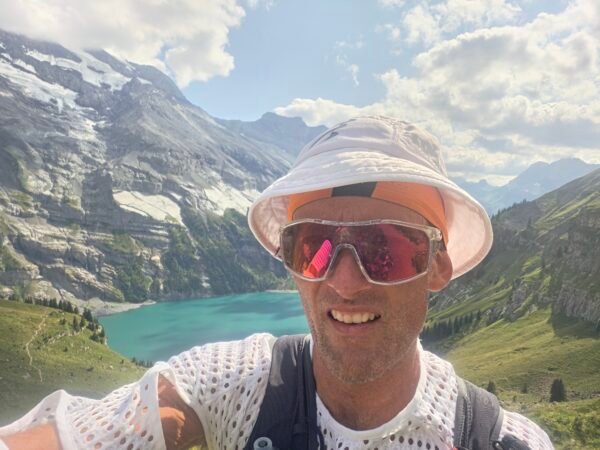
    Oeschinense

    Chapter 6: The Darkest Battle

    Kandersteg to Les Diablerets – Fighting Fatigue, Pain and the Night

    Leaving Kandersteg, I knew the nature of the race had changed.

    Up until this point, the main challenge had been the scale of the mountains and managing the sleep deprivation.

    Now there was another factor.

    My left foot.

    The extensor digitorum longus tendon issue that had started on the descent from Hohtürli towards Oeschinensee was becoming increasingly noticeable.

    The worry was not necessarily whether I could climb.

    The climbs were still manageable.

    It was the descents.

    Every downhill step was a reminder that something was wrong.

    The next section was the climb towards:

    Bunderchrinde – 2,382m

    The trail climbed steeply through endless switchbacks.

    It felt like the path just kept winding upwards.

    Jean-Marc and another runner gradually caught and passed me on the climb. They were moving steadily while I tried to manage my foot and conserve enough energy for what lay ahead.

    As I approached the summit, daylight was fading.

    I put my headtorch on.

    Another night in the Alps was beginning.

    Near the top, I bumped into an American hiker who was camping for the night while completing the Via Alpina.

    We chatted briefly.

    It was another reminder that this route was not just a race course.

    It was a journey shared with hikers, runners and adventurers all travelling through the same mountains.

    The descent from Bunderchrinde was difficult.

    Very difficult.

    It was steep, technical and covered in loose, rocky gravel.

    With my left foot causing problems, I struggled to move naturally.

    I stumbled my way down, trying to protect the painful area while still making progress.

    The route wound through the darkness.

    The only sounds were my own footsteps and the constant ringing of cowbells from the alpine pastures.

    At this point, mentally, I was low.

    I was exhausted.

    My foot hurt.

    And the aid station at Adelboden felt like it was taking forever to arrive.

    Eventually, after what seemed like an endless descent, I reached it.

    Adelboden was another interesting aid station experience.

    There was one shower and one toilet.

    This meant a constant flow of runners coming in and out — men and women sharing the same facilities.

    At that stage, I was so exhausted that I barely cared.

    I know for some other runners it was more of an issue, but my priority was simply survival.

    I decided to try another massage.

    However, I was so tired that I could barely stay awake on the massage table.

    The masseuse eventually suggested trying again in the morning.

    I went into the dorm area where there were beds available.

    This was another chance to recover.

    Surely this time I would sleep.

    Unfortunately, once again, it did not work.

    Despite being completely exhausted, my brain refused to switch off.

    At one point I somehow ended up lying sideways, scrunched up, convinced I was lying on a tiny bed.

    The ridiculous thing was that when I got in, I knew it was a normal-sized bed.

    Sleep deprivation does strange things.

    Eventually, I heard Sophie talking in her sleep.

    That was how I realised she and Timm had arrived.

    After around three hours of lying there without meaningful sleep, I gave up.

    I got up.

    I tried another massage on my foot.

    But it was becoming clear that it was not going to magically fix the problem.

    So around 4:30–5:00am, I headed back out onto the course.

    I bumped into Jean-Marc again.

    He had managed to sleep reasonably well and moved ahead.

    I continued towards Bummerepass and then down towards Iffigenalp.

    By now, fatigue was becoming overwhelming.

    When I arrived at Iffigenalp, I was struggling.

    There was a mattress outside a gazebo, away from the heat of the sun.

    I lay down.

    For around 30 minutes I rested there.

    I did not really sleep, but once again it gave my body a chance to reset.

    Then I heard familiar voices.

    Sophie and Timm had arrived.

    It immediately lifted my spirits.

    They told me they genuinely thought they would not see me again after Adelboden.

    Sometimes, in these races, seeing friends at exactly the right moment can completely change your mindset.

    I set off with Sophie, Timm and Buquin Xu towards:

    Schigelshafberg Pass – 2,380m

    The conditions were brutal.

    The sun was blazing.

    The heat was intense.

    There was no water source on the route.

    And the accumulated fatigue from days in the mountains was catching up with me.

    At one point, I simply could not continue.

    I lay down and took several power naps while the others moved ahead.

    It was frustrating.

    Physically, I still wanted to move.

    Mentally, I still wanted to finish.

    But the combination of:

    • severe sleep deprivation
    • dehydration
    • heat
    • and the painful foot

    was becoming overwhelming.

    The descent into Gsteig felt endless.

    The heat made every kilometre drag.

    Eventually, exhausted and struggling, I reached the aid station.

    Gsteig was supposed to be a self-service aid station.

    Ironically, it became one of the best stops of the entire race.

    A really friendly and enthusiastic volunteer was there preparing food and helping runners.

    I sat outside in a chair and was surprised to find:

    • Sophie
    • Timm
    • Fenna
    • Buquin Xu

    were all still there.

    It was another boost.

    Sophie and Fenna left earlier, but eventually I headed towards Les Diablerets Life Base with Buquin Xu.

    As we travelled, we were rewarded with an incredible alpine sunset.

    For a short time, everything felt perfect.

    Then darkness arrived again.

    The section into Les Diablerets became another mental battle.

    With extreme sleep deprivation, I found myself climbing and descending endless forest switchbacks in the darkness.

    The foot was painful.

    The body was exhausted.

    And I was alone again.

    The distance seemed endless.

    Every step required effort.

    Eventually, I reached:

    Les Diablerets Life Base

    There was only one thing I wanted.

    Sleep.

    Unfortunately, the aid station was packed.

    Completely packed.

    There was barely any space.

    No beds available.

    The frustration was huge.

    After everything we had already endured, finding somewhere to sleep felt like another battle.

    Sophie had managed to get a bed.

    I saw Timm, who had been to the podiatrist, and Buquin Xu.

    Buquin was incredibly kind.

    He spoke to one of the volunteers and explained that I was struggling badly with fatigue and asked if they could find somewhere for me to rest.

    Before that happened, I managed to eat some raclette and sausage.

    It was genuinely good food.

    One of the better meals of the race.

    But physically and mentally, I was finished.

    I sat there with my head resting on my drop bag.

    I barely had enough energy to open it.

    At one point I considered taking my sleeping bag and mat outside and sleeping in the cold.

    I even thought about leaving immediately and hoping the next aid station would have somewhere quieter to rest.

    Thankfully, I resisted.

    I needed sleep.

    Buquin also kindly gave me some vitamin tablets and lozenges as I had developed a cough.

    One frustrating aspect of the aid station was seeing runners arriving later getting beds while exhausted runners already there were still waiting.

    A clearer system would definitely have helped.

    Eventually, Timm suggested:

    Even if beds were unavailable, could we use our own sleeping mats and sleep on the floor?

    Thankfully, the volunteers agreed.

    It was a huge relief.

    I climbed straight into my sleeping bag without even changing clothes.

    I slept for around three hours.

    It still was not perfect.

    The dorm was busy.

    There was noise.

    But it was sleep.

    And at that stage, sleep was everything.

    When I woke up, I ate more raclette and sausage, followed by pancakes with Nutella.

    For food, Les Diablerets was definitely one of the better aid stations.

    Unfortunately, the masseuse was not available.

    However, the hut had become quieter.

    Finally, I could access my drop bag, shower, change clothes and prepare to continue.

    Before leaving, I noticed my watch battery was only at 10% despite being on charge.

    I went back, sat in the aid station and topped it up.

    I took the cable with me and finally headed out.

    Unknown to me at the time, Les Diablerets would also be where Martin Wilson’s race would end.

    I did not find out the full story until later in Montreux.

    Earlier in the race, I had noticed Martin’s pace had slowed dramatically after his strong start, and Tim had eventually caught and passed him.

    Martin had developed problems, including illness and an ankle injury.

    On the forest switchbacks approaching Les Diablerets, he fell into a ditch and became stranded during the night.

    He spent several hours in the cold before eventually being rescued and taken away on a stretcher.

    He was treated at the local hospital, given crutches and underwent blood tests.

    After returning to the UK, further treatment was needed, including intravenous antibiotics after being diagnosed with Campylobacter infection.

    Hearing what had happened was a sobering reminder.

    In a 400km alpine race, everyone is fighting their own battle.

    You never truly know what someone else is going through.

    Chapter 7: The Final Push

    Les Diablerets to Montreux – The Longest Last Kilometres

    Going into Friday, I was still severely sleep deprived.

    The previous days had taken their toll.

    Physically I was tired.

    Mentally I was tired.

    My left foot was painful.

    But I was close.

    The finish line in Montreux was somewhere ahead.

    After my experience at Swiss Peaks, I had hoped the final day might bring some relief.

    At Swiss Peaks, the final day had felt different.

    There had still been plenty of climbing and it was still a huge challenge, but there had been kinder terrain and a fantastic sequence of aid stations — almost like the race was gradually allowing you to reach the finish.

    I was hoping Crossing Switzerland might provide something similar.

    Unfortunately, the Alps had other ideas.

    Leaving Les Diablerets, the next stop was Le Sépey.

    When I arrived, I made the decision to sleep.

    There were mats behind a curtain, away from the main activity of the aid station.

    I lay down for around 30 minutes.

    Looking back, I should probably have stayed longer.

    The conditions were quiet.

    Much quieter than Les Diablerets.

    If I had known beforehand how much better the sleeping conditions were, I would probably have planned differently:

    Sleep at Le Sépey.

    Skip the chaos of Les Diablerets.

    But hindsight is always clearer.

    Even that short rest helped slightly.

    Eventually, I packed up and continued.

    The next section involved the climb towards Luan.

    Neither this section nor the previous one was necessarily the hardest terrain of the race.

    But by this stage, the combination of:

    • sleep deprivation
    • my injured foot
    • extreme heat

    was slowing everything down.

    At Luan, I stopped for food.

    I had a tortilla and spoke with one of the volunteers.

    I mentioned that my biggest concern was the descents.

    He looked at me and said:

    “I would be screaming about the final section if that was the case.”

    He was not wrong.

    He also spoke to another runner who was carrying an ice pack and described the final part as the:

    “easy section to the finish.”

    The runner replied:

    “Easy? Easy for who?”

    It made me laugh.

    Because after hundreds of kilometres through the Alps, “easy” was definitely a relative term.

    The next section was anything but easy.

    It involved an incredibly steep, relentless climb through a Swiss forest that felt like a sauna.

    The heat was intense.

    There was little shade.

    There was no water source.

    The climb seemed endless.

    Eventually, I reached the ridge.

    Lake Geneva and Montreux were now visible in the distance.

    The finish was close.

    But close does not necessarily mean easy.

    The terrain changed into a steep, technical descent through overgrown sections of trail.

    The heat continued.

    The fatigue continued.

    Everything was catching up.

    At one point, I was filming a video while licking sticky gels and salt residue from my hands and phone.

    As I did so, a group of cows started charging towards me.

    At the time it was slightly alarming.

    Looking back, it was hilarious.

    It will definitely be one of the more memorable moments in the vlog.

    Eventually, I reached Col de Chaude.

    By this stage, I had been alone for much of the day.

    I was tired.

    Hungry.

    Thirsty.

    I just wanted to sit down and consume something.

    Thankfully, the volunteers were fantastic.

    They told me something that surprised me:

    A lot of runners had described the previous section as one of the hardest parts of the entire race.

    Some people had arrived during the night completely exhausted and disoriented, struggling down the technical ridge.

    It made me feel slightly better.

    Sometimes when you are suffering alone, you assume everyone else is moving easily.

    They are not.

    Everyone is fighting.

    I ate, drank and prepared for the final major climb.

    Around 5pm, I left Col de Chaude.

    The next objective:

    Rochers-de-Naye

    The final summit before Montreux.

    The climb was still tough.

    At this stage of a 400km race, nothing is easy.

    But mentally, things were different.

    The finish was no longer some distant idea.

    It was real.

    It was close.

    When I reached Rochers-de-Naye, I was told:

    “One final technical descent, then it gets easier.”

    That sounded perfect.

    Unfortunately, my foot had other ideas.

    By this stage, my left foot was in a terrible state.

    The laces were completely untied.

    The swelling was so bad that I could barely bend it.

    Every step was painful.

    But mentally I was determined.

    I knew I was going to finish.

    On the final descent, I met two Austrian women walking with their dog.

    We started chatting.

    One of them told me about cycling across Patagonia.

    They were friendly, enthusiastic and completely unaware of the internal battle happening inside me.

    For a few minutes, it felt like a normal mountain day.

    As they left, I thought:

    “Just the final few kilometres down to Montreux. I’ll be fine.”

    Then, as happens so often in ultras, everything changed.

    The final descent entered the gorge.

    The route wound through forest switchbacks.

    Suddenly, the accumulated effects of everything hit me:

    The sleep deprivation.

    The dehydration.

    The exhaustion.

    The foot pain.

    Every kilometre became painfully slow.

    I was stumbling down the trail.

    Other runners passed me, moving towards the finish.

    Normally that would have bothered me.

    At that stage, it didn’t.

    I just needed to keep moving.

    That final descent was honestly one of the hardest sections of the entire race.

    Not because of the terrain.

    Not because of the elevation.

    Because my body had nothing left.

    Eventually, the lights of Montreux appeared.

    I was close.

    As I approached the finish area, a woman from Colorado came towards me.

    She had followed the race and decided to run the final section with me.

    Those final metres were incredibly emotional.

    Not because I felt joy.

    Not yet.

    When I crossed the finish line, my overwhelming feeling was:

    Relief.

    Nothing else.

    No celebration.

    No huge rush of happiness.

    Just relief.

    I had pushed myself so far beyond what felt comfortable that there was nothing left.

    I was finished.

    At the finish line I received my medal and finisher T-shirt.

    I met the Colorado runner’s husband, and it turned out she had also entered the race but unfortunately had not finished.

    She was signed up for Moab 200, another huge endurance challenge.

    I told them:

    “I’m never doing anything like this again.”

    They laughed.

    They had heard that before.

    They replied that tomorrow I would think differently.

    They were right.

    The husband explained that they had been tracking my progress and had decided to come and meet me at the finish.

    They asked if they could help.

    The only thing I wanted was my bags.

    They went with one of the incredibly kind volunteers to collect them.

    The volunteer had even packed my finisher T-shirt safely inside my bag.

    They asked where I was staying.

    When they heard I needed transport, they booked me an Uber.

    The two of them and the volunteer waited with me until it arrived.

    That kindness meant a lot.

    After six days in the mountains, small acts of generosity felt enormous.

    Chapter 8: Montreux

    Relief, Recovery and Realising What We Had Done

    Arriving at the B&B after the finish was another small adventure in itself.

    After everything I had just been through, I was completely exhausted and not functioning at my best.

    When I arrived, I initially could not get in.

    I had to phone the owner, and eventually the door was opened.

    He was understandably frustrated because he had messaged me through the booking app with different instructions, and I had not seen them.

    I explained that I had just finished a 400km alpine race and was honestly running on very little sleep and even less mental capacity.

    Thankfully, his attitude changed.

    He helped me with my bags, and the following day he was genuinely friendly, proudly telling other guests about what I had achieved.

    It was a good reminder that first impressions can sometimes be misleading, especially when everyone involved is tired.

    The following morning, after some much-needed recovery, I started reconnecting with everyone from the race.

    I met up again with:

    • Timm Dunker
    • Sophie Littlefair
    • Phil (Sophie’s husband)
    • Fenna
    • Joe Balcken
    • Simon Wullimann

    Joe had eventually finished on Saturday, while unfortunately Simon had not been able to complete the journey.

    It was great to see everyone again away from the pressure of the course.

    During these races, you spend days together in some of the hardest moments of your life.

    You see people tired, frustrated, struggling, laughing and pushing through.

    Those shared experiences create a unique bond.

    I also met Ziggy from Finland, who had finished on Saturday.

    We had met back in Bad Ragaz at the start of the race.

    He was asking about Dave and Dale, who were still out on the course.

    I explained that they were still battling away, along with Liz Hopkins, who I had met during Swiss Peaks and who was a few hours ahead of them.

    Their journeys were a perfect example of what makes these races special.

    Everyone has their own race.

    Everyone has their own battle.

    The finish times are only part of the story.

    One of the moments that really stayed with me came when I spoke with Sophie.

    I asked her how Crossing Switzerland compared with the other incredible endurance challenges she had completed.

    Her answer was simple:

    “This is the hardest thing I’ve ever done in my life.”

    And honestly, the feeling was mutual.

    Crossing Switzerland had demanded everything:

    Physically.

    Mentally.

    Emotionally.

    There had been moments of incredible beauty.

    Moments of laughter.

    Moments of friendship.

    But also moments where continuing felt almost impossible.

    That combination is what makes these races unforgettable.

    Chapter 9: The Final Finishers

    Dave, Dale and the True Spirit of Crossing Switzerland

    While some of us had already reached Montreux, the race was still continuing.

    Dave and Dale were still out there.

    For Dale especially, this was an enormous challenge.

    He had previously completed a 50km ultra at UTS, but Crossing Switzerland was on an entirely different scale.

    To go from that experience to completing a 400km alpine crossing was a huge achievement.

    The weather forecast for Saturday night was looking poor, and the race organisers introduced a bad weather route for the final two legs.

    Despite everything, Liz Hopkins battled through and eventually finished around 2:30am.

    Then Dave and Dale continued their own fight to the finish.

    They finally arrived around midday.

    What impressed me most was their condition.

    After 400km through the Alps, they were still full of energy.

    They were smiling.

    They were talking.

    They were celebrating.

    It was completely different from how I had looked arriving the previous night.

    They showered.

    They had massages.

    They ate properly.

    They collected their drop bags.

    Eventually, the fatigue caught up and they headed back to the B&B.

    But what an achievement.

    To complete that journey after everything the mountains had thrown at them was incredible.

    Chapter 10: Lake Geneva

    The Final Celebration

    On Sunday, I met up with Martin.

    Despite everything he had been through, he kindly offered for me to stay at his Airbnb that night.

    It was an incredible place:

    A spectacular rustic 15th-century château, divided into small Airbnb apartments with amazing views looking down over Montreux.

    After everything that had happened during the race, it felt like the perfect place to reflect.

    The weather had been beautiful, and Montreux provided a completely different contrast to the mountains we had spent the previous week crossing.

    Later, I waited for the closing ceremony.

    Alongside Alex Lunghi, who I had met during those difficult early sections of the race, we joined the traditional celebration:

    The mass jump of Crossing Switzerland finishers into Lake Geneva.

    After 400km across Switzerland, runners who had spent days battling exhaustion, injury and sleep deprivation suddenly found themselves jumping into the lake together.

    It was a brilliant way to finish the adventure.

    Although there was one slight problem.

    We had been promised towels afterwards.

    Unfortunately, many non-swimmers and spectators wanting souvenirs had taken them.

    The people who had actually jumped into Lake Geneva were left without anything to dry themselves with.

    Eventually, Alex and I managed to persuade someone to give us one towel.

    We shared it.

    After everything else we had experienced, it seemed fitting that even the final celebration involved a small challenge.

    Whilst doing the race Sophie Grant completed the FKT for the entire Via Alpina in 29 days conquering 2000 km’s. Tim Wiggins and Mark Thompson had a chat with her near Oeschinense and remarked on how she was ‘fresh as a daisy’. After completing Crossing Switzerland in certainly makes you appreciate the scale of this remarkable achievement.

    Final Thoughts

    What Next?

    Crossing Switzerland was an incredible adventure.

    Of roughly 340 runners who lined up for Crossing Switzerland 400, only 194 made it to Montreux, meaning around 150 runners were unable to complete the journey. A finish rate of just over half shows how tough this 400km, 25,000m+ alpine crossing really was.

    It was beautiful.

    It was brutal.

    It was funny.

    It was frustrating.

    It tested every part of me.

    There were moments where I felt incredibly strong — running through the Jungfrau region, climbing Hohtürli and feeling like I had finally found my rhythm.

    There were moments where I was completely broken — lying exhausted at aid stations, unable to sleep despite desperately needing it, struggling down descents with an injured foot.

    But that is why these adventures are so memorable.

    The mountains give you everything.

    The highs only exist because of the lows.

    Looking back, the biggest memories are not just the mountains or the distance.

    They are the people.

    Sophie.

    Timm.

    Fenna.

    Alex.

    Joe.

    Tim

    Simon.

    Buquin Xu.

    Jean-Marc.

    Dave.

    Dale.

    Martin.

    Liz.

    And all the volunteers and strangers who helped along the way.

    Crossing Switzerland was my second huge Swiss alpine crossing after Swiss Peaks.

    Both were brutal.

    Both were unforgettable.

    Both showed me why I keep returning to the Alps.

    Of course, immediately after finishing, I said:

    “I’m never doing anything like this again.”

    But everyone was right.

    A few days later, the thoughts changed.

    The mountains were already calling again.

    The next big goal?

    Another legendary race:

    TOR330 – Tor des Géants.

    Another journey through the Alps.

    Another impossible challenge.

    Another adventure waiting to begin.
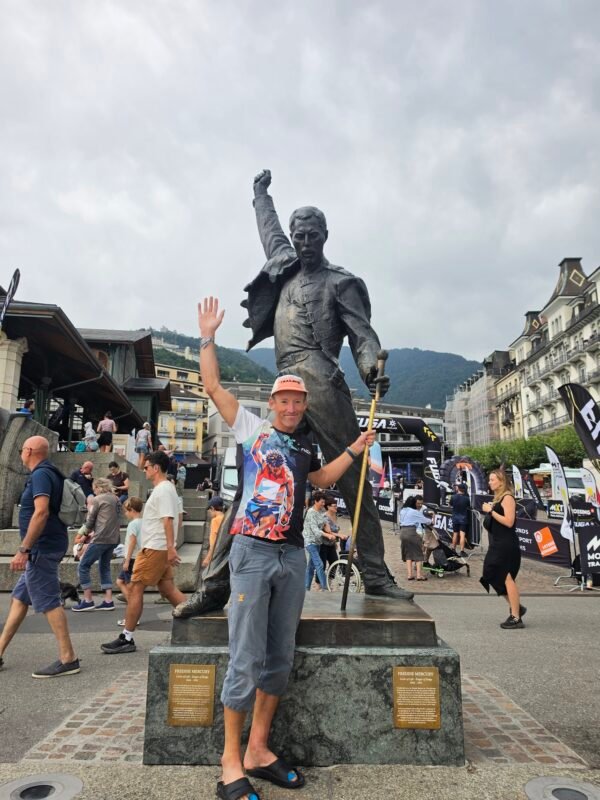
    Freddie Mercury Statue

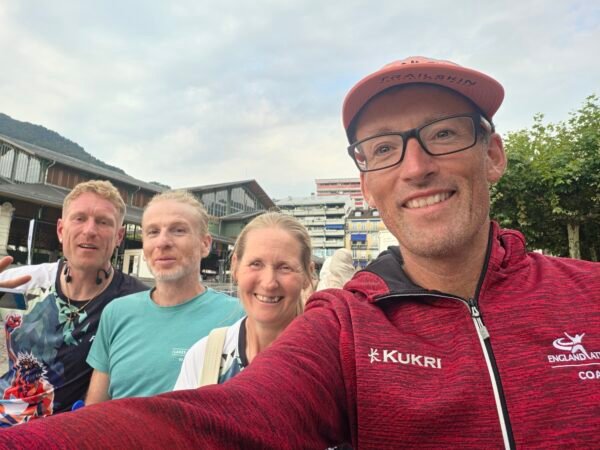
    Me, Liz, Martin, Dale at the finish on Sunday

  • Inaugural Fish & Chips 5k

    Inaugural Fish & Chips 5k

    Jane Adlard writes:

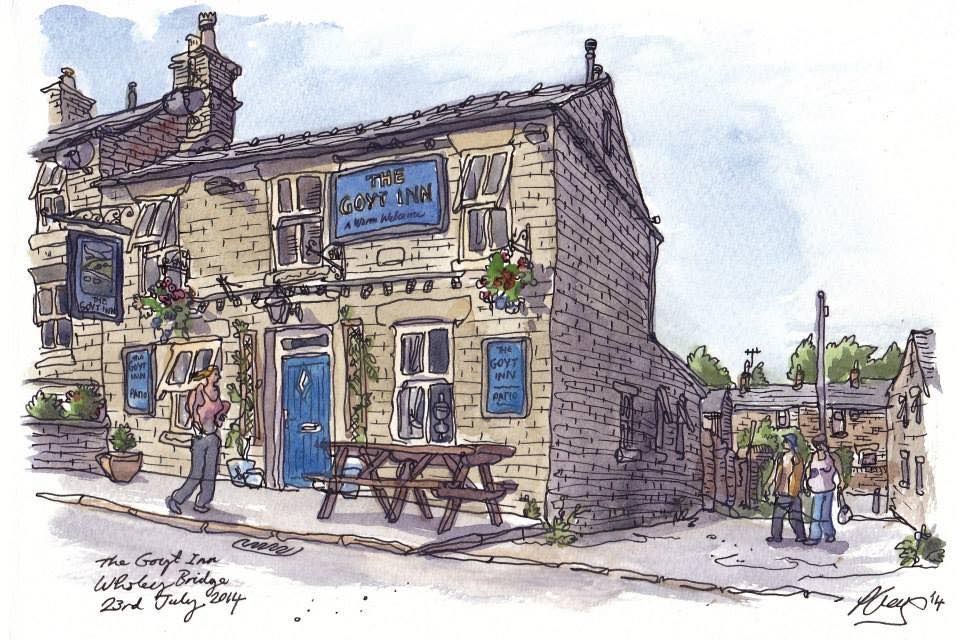
    The inaugural running of this event took place on a gorgeous summer’s evening, starting and finishing at the Goyt Inn — because nothing says “elite running event” quite like a table full of pints. Nine brave souls took part, several signing up on the night, presumably after doing the maths on the entry fee versus chip prices and deciding it was rude not to.

    The challenge: run a 5k rural route and arrive back as close to 7.30pm as possible — no watches, no Garmins, no cheeky glances at your phone. Just you, your legs, and whatever internal chronometer evolution has fitted you with. Whoever nailed 7.30 most precisely would be crowned champion, and would also, more importantly, be confirmed as insufferably good at pacing henceforth. Fish and chips for all afterwards in the Goyt, only a fiver to enter (deducted off your chippy tea), with the Club picking up the rest of the tab — meaning you could, in theory, have gone full lobster*, large chips, gravy, peas, curry sauce AND a pickled egg and still come out ahead.

    Kieran and Jane took up their official posts outside the pub — pints in hand, purely for research purposes — to check runners out, welcome them home, guard fiercely against any watch-related skulduggery, and take fish and chip orders like a pair of very committed maître d’s. Entrants trickled off anywhere between 6.30 and 7.05pm depending on their own private pace calculations, ranging from “confident” to “wildly optimistic”.

    First home was Pete Fotheringham, romping in at 7.17pm — a full 13 minutes early, technically the worst timing performance of the night, but also, delightfully, his fastest run in ages, so he wasn’t complaining. Next up: Sue Holland (7.19), Paul Hunt (7.21), and hot on his heels, Chris Tetley (7.23). Lorna and Chris Cullen crossed together at 7.25, presumably having had a lovely chat about pace strategy en route.

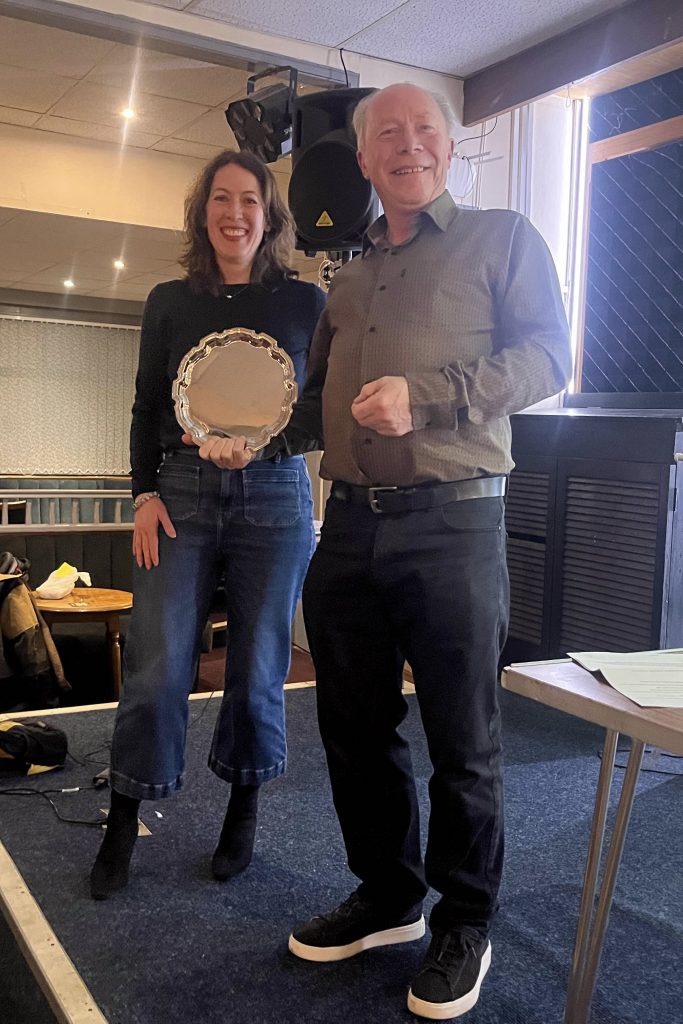
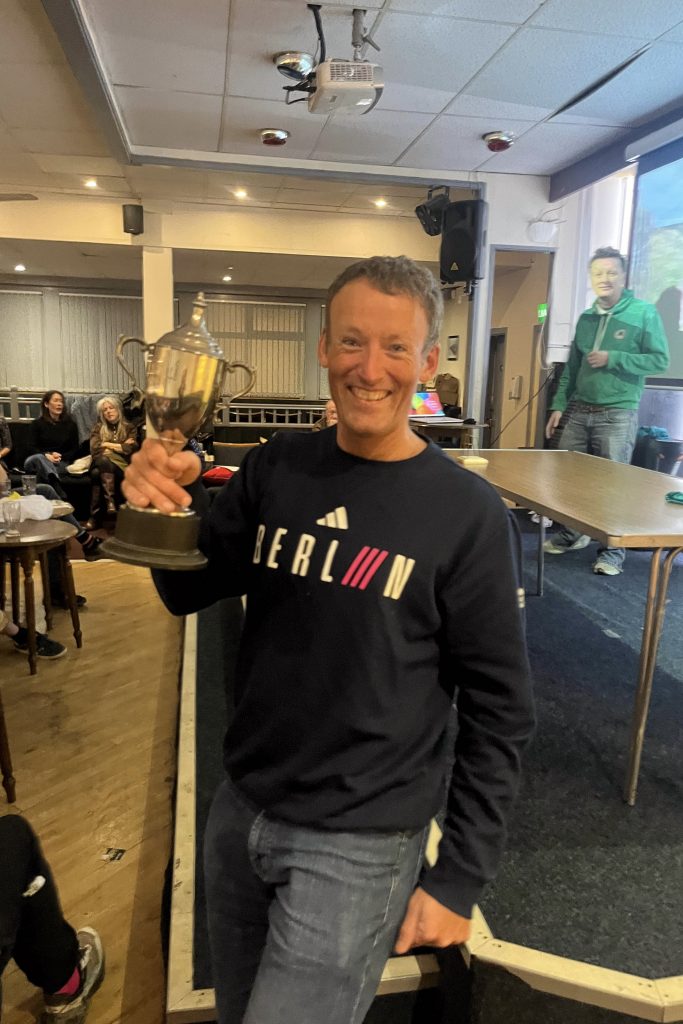
    That left a proper nail-biter between Brian Holland, Mary Jones, and Lucas Jones — three runners who had either genuinely mastered the art of pacing, or spent a solid half hour loitering suspiciously round the corner, eyes fixed on the Mechanics’ Institute clock, waiting for their moment. We may never know. Brian took third at 7.28:38, Mary pipped him for second at 7.28:57, and — by the narrowest of margins — Lucas Jones claimed the win, arriving at the stroke of 7.29:00 dead. A stunning trophy awaits him at the AGM, and frankly he’s earned it.

    Fish and chips (sadly, no pickled eggs) had been duly ordered by Kieran, with the Goyt supplying plates and eating irons. With everyone converging on the pub within minutes of each other, it made for a brilliant social afterwards. A thoroughly good night was had by all, and — despite the mysterious lurking near clocks — everyone swore blind they’d do it again.

    * The Chippy does not, as far as anyone is aware, serve lobster. This was largely theoretical lobster, offered in the spirit of “you could have,” not “you actually could”. Runners hoping to test this loophole were quietly redirected towards the cod.


    namefinish
    Lucas Jones7:29:00
    Mary Jones7:28:57
    Brian Holland7:28:38
    Lorna Cullen7:25:11
    Chris Cullen7:25:11
    Chris Tetley7:23:47
    Paul Hunt7:21:32
    Sue Holland7:19:46
    Pete Fotheringham7:17:16

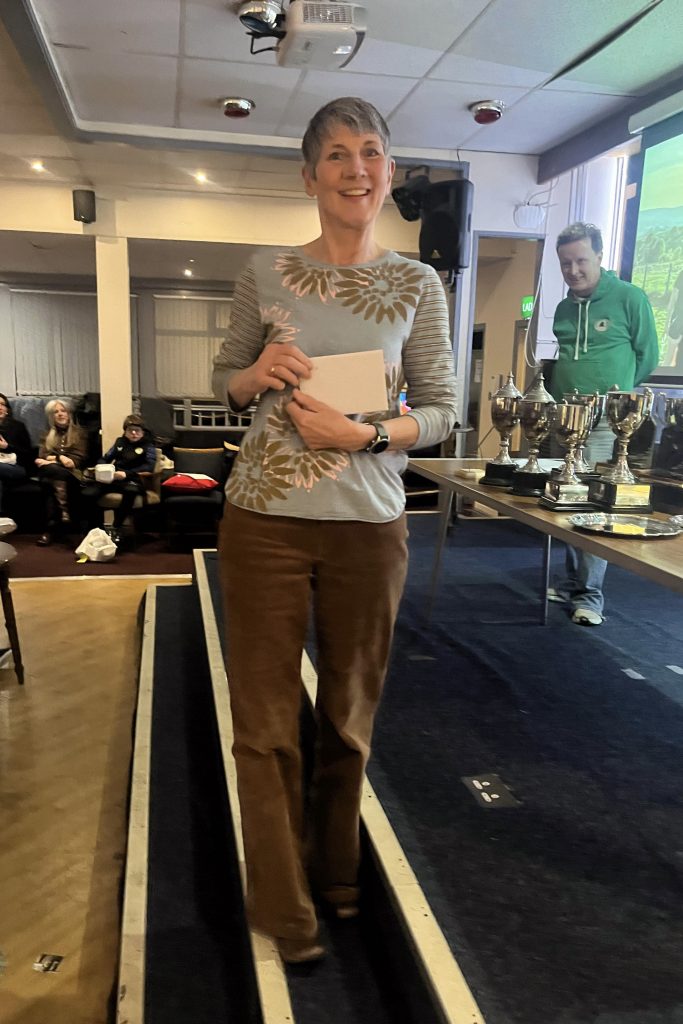
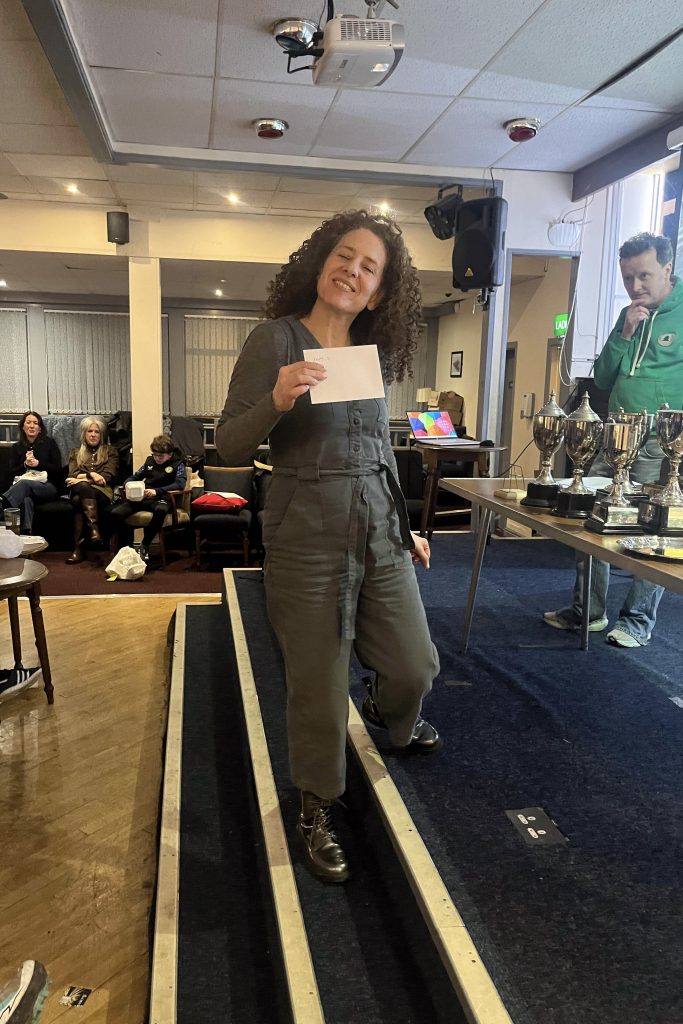
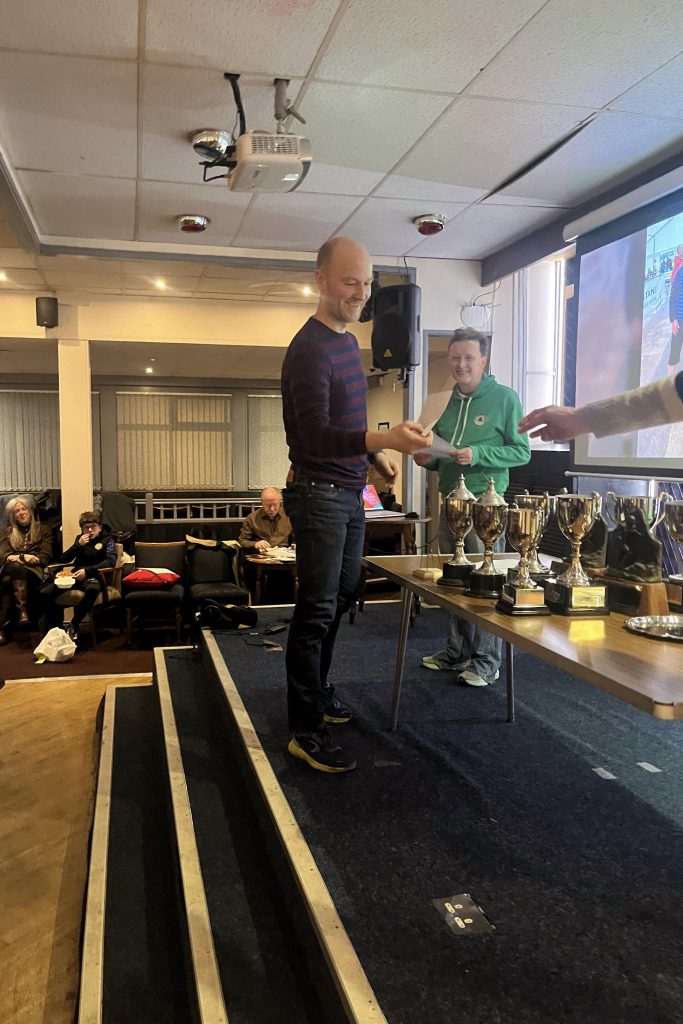
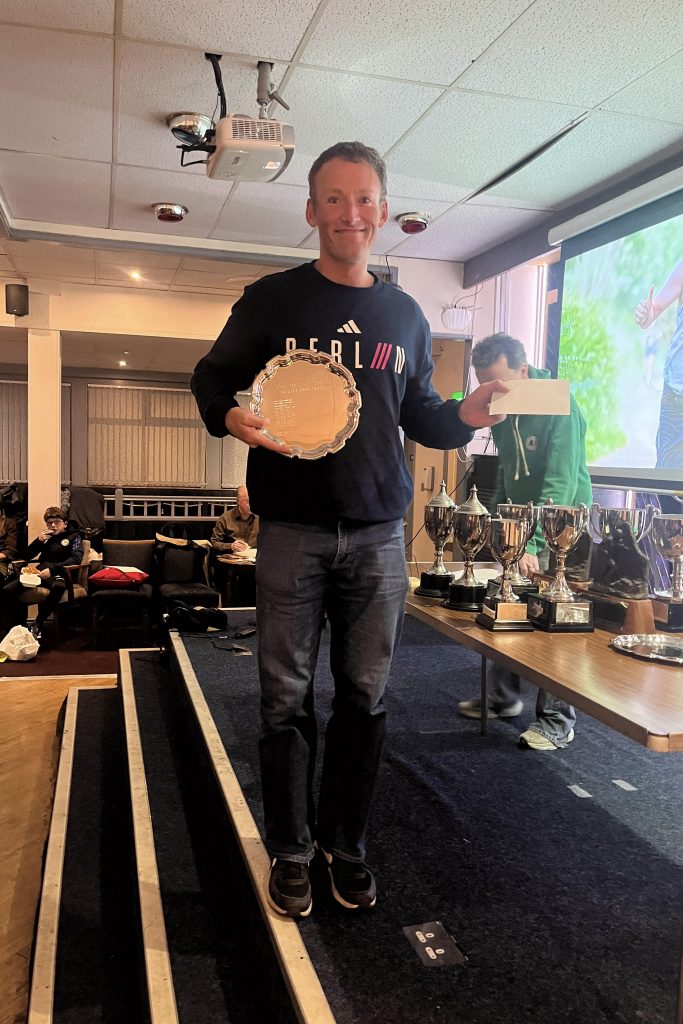
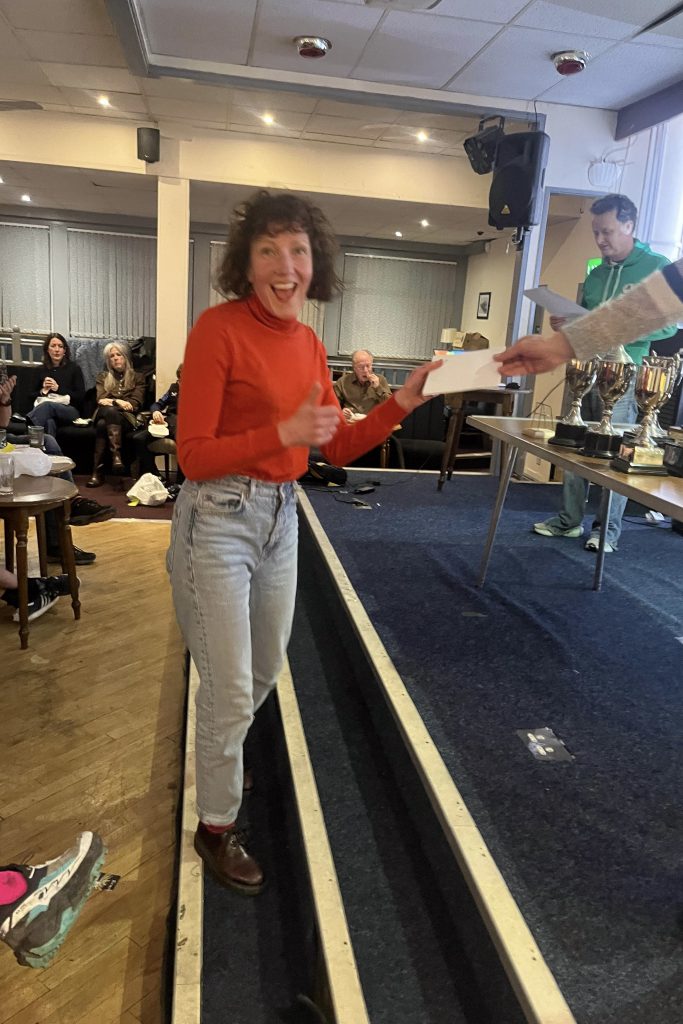
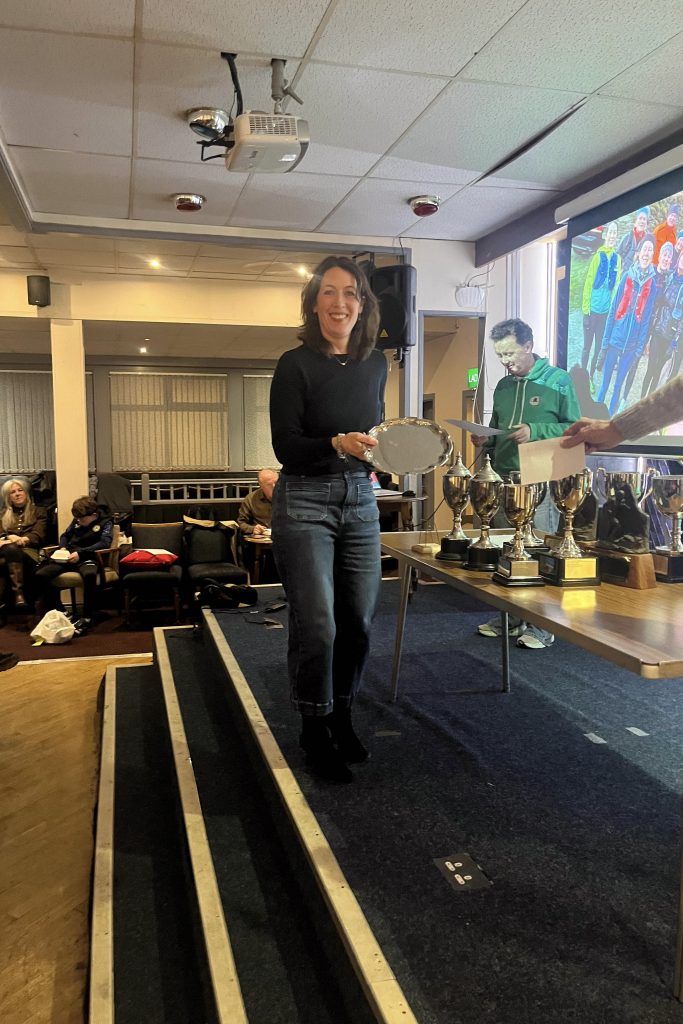
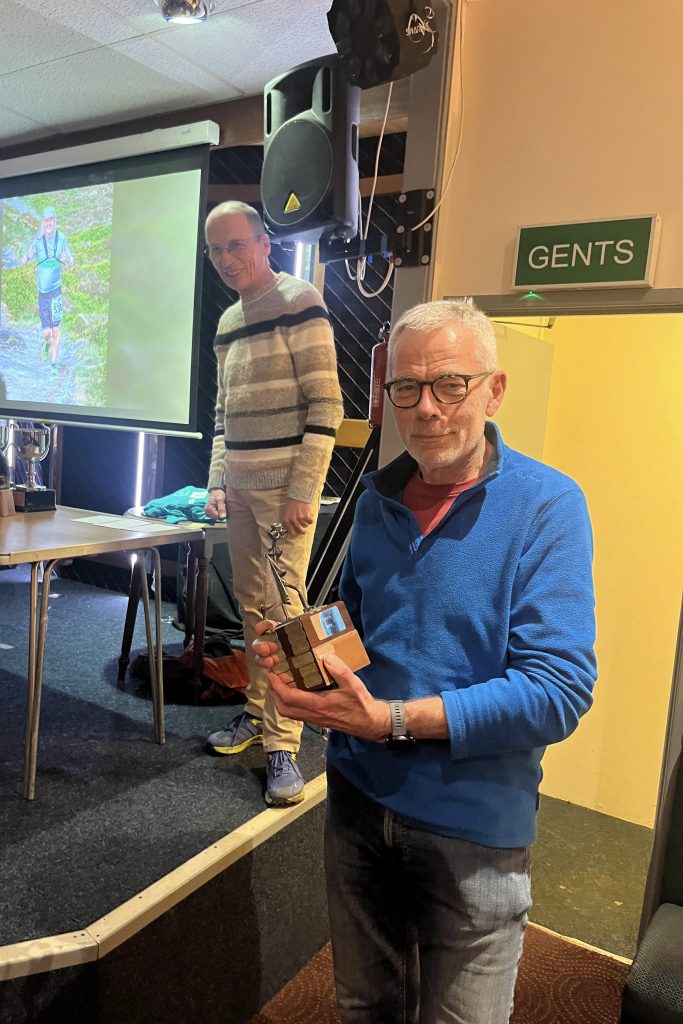
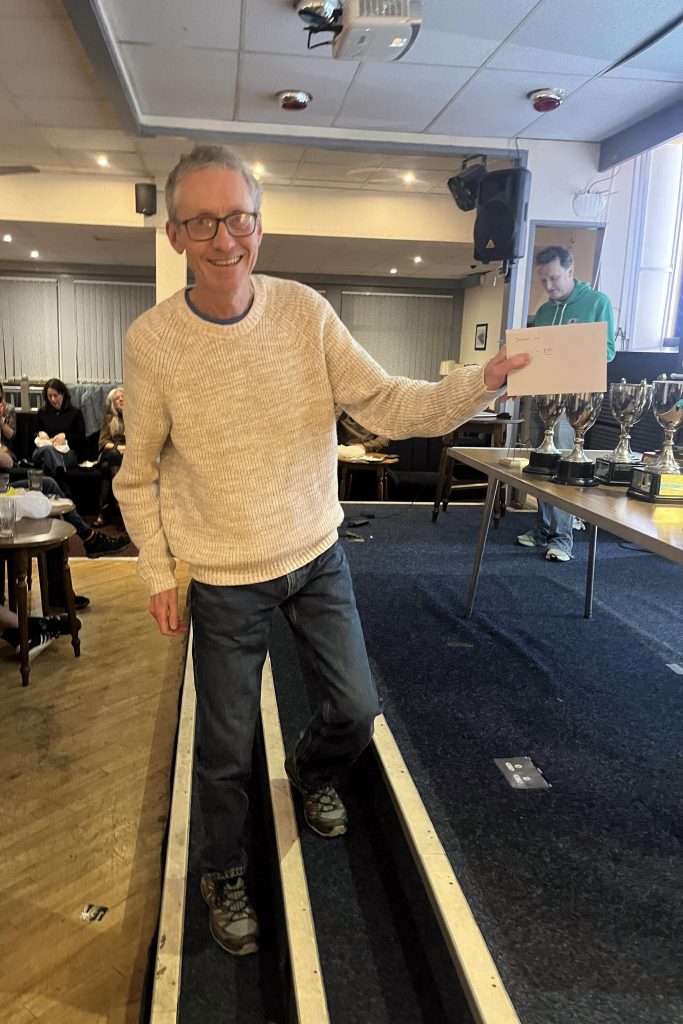
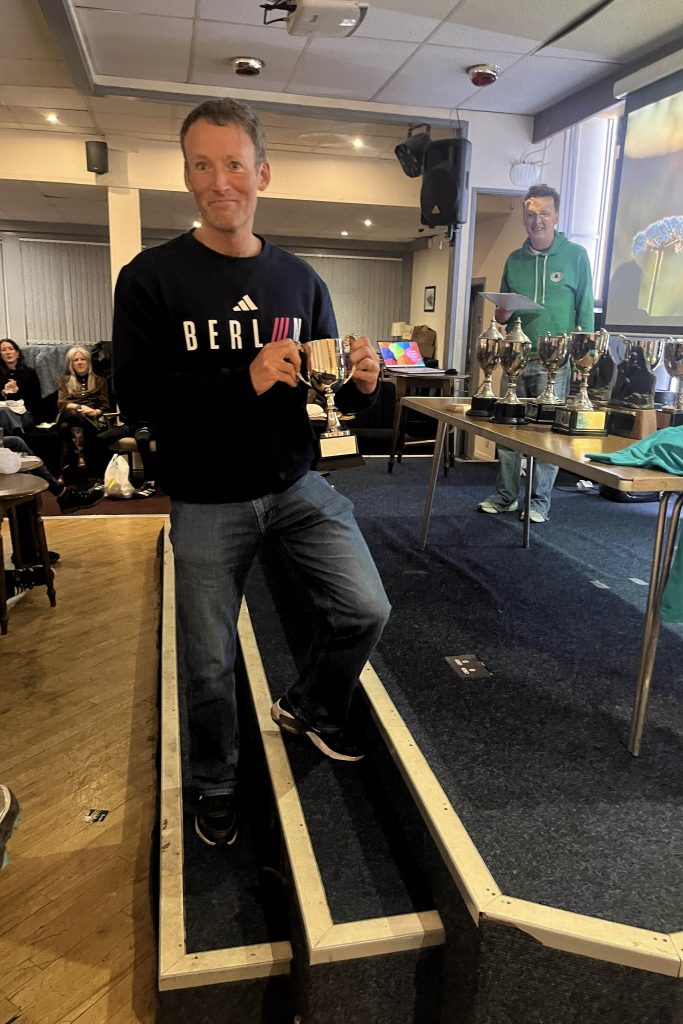
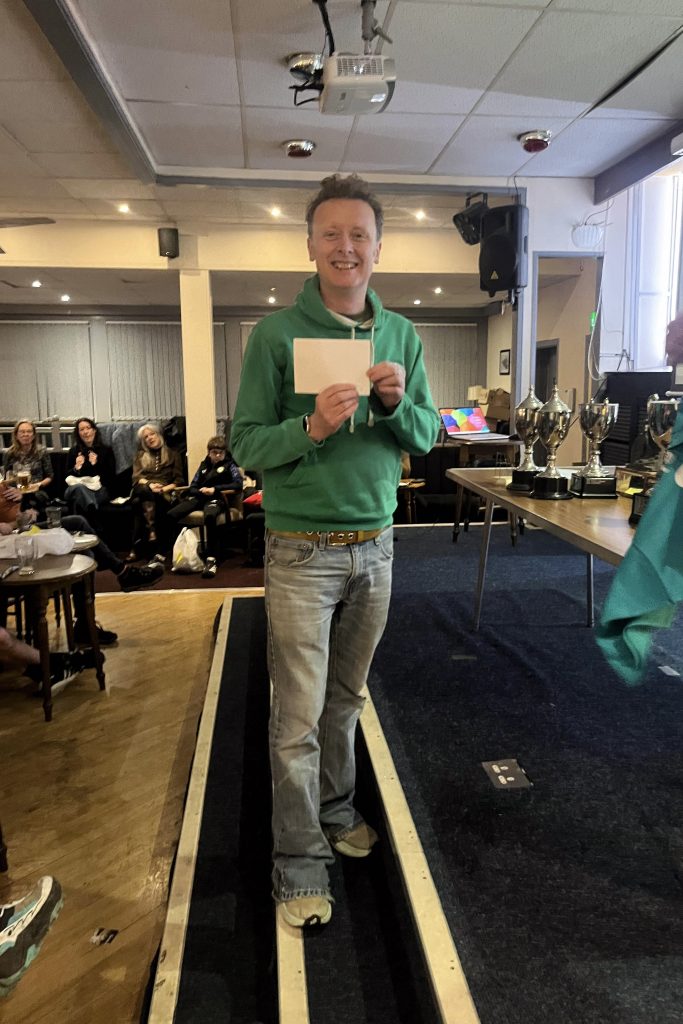
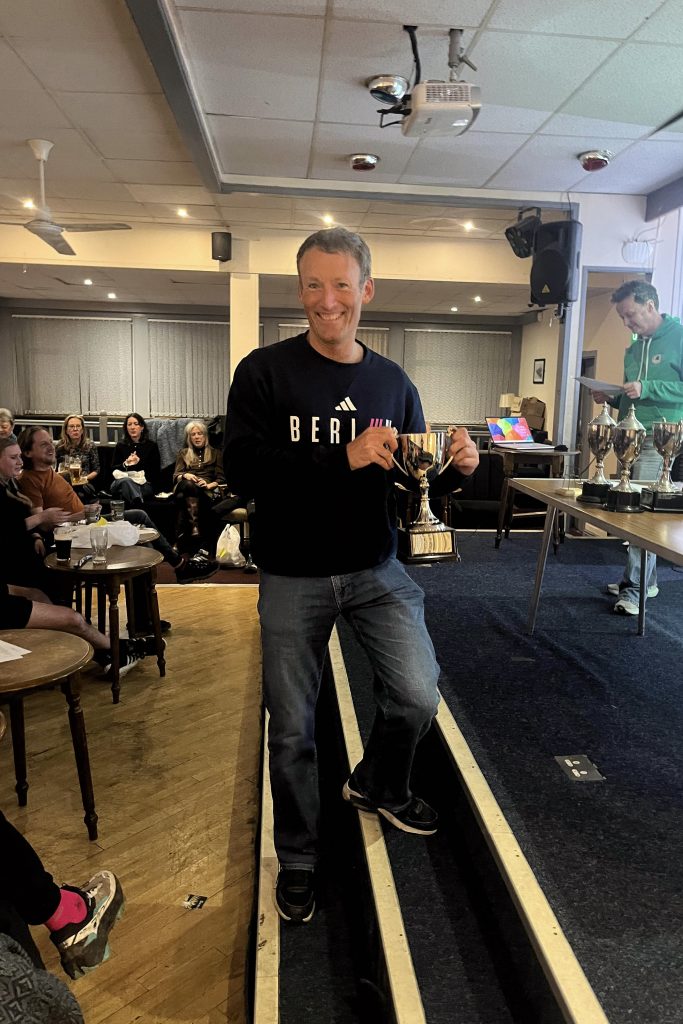
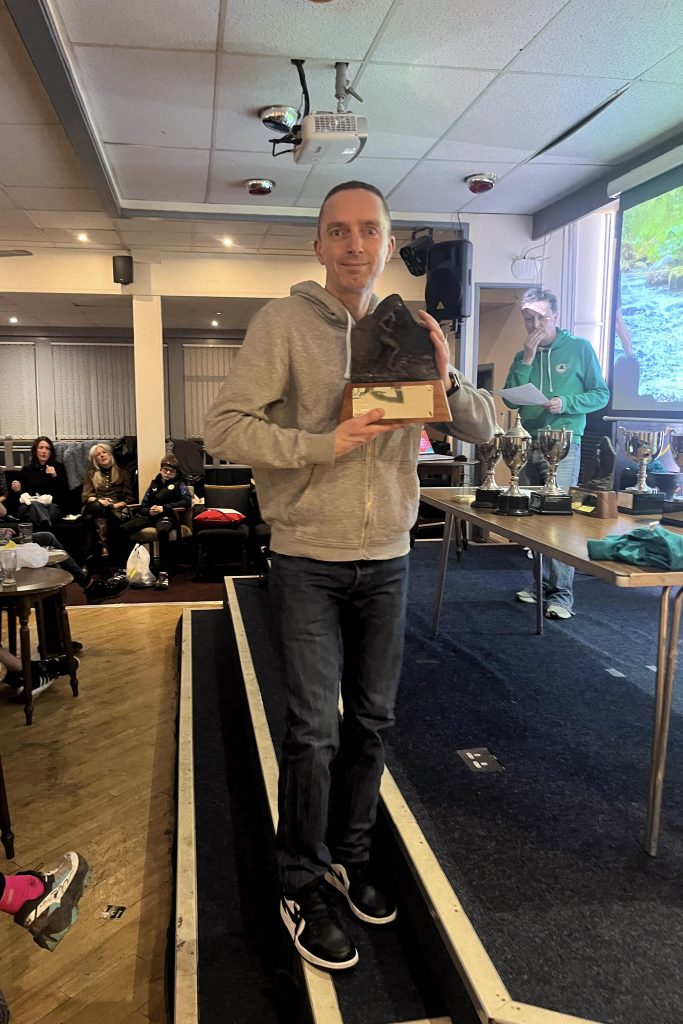
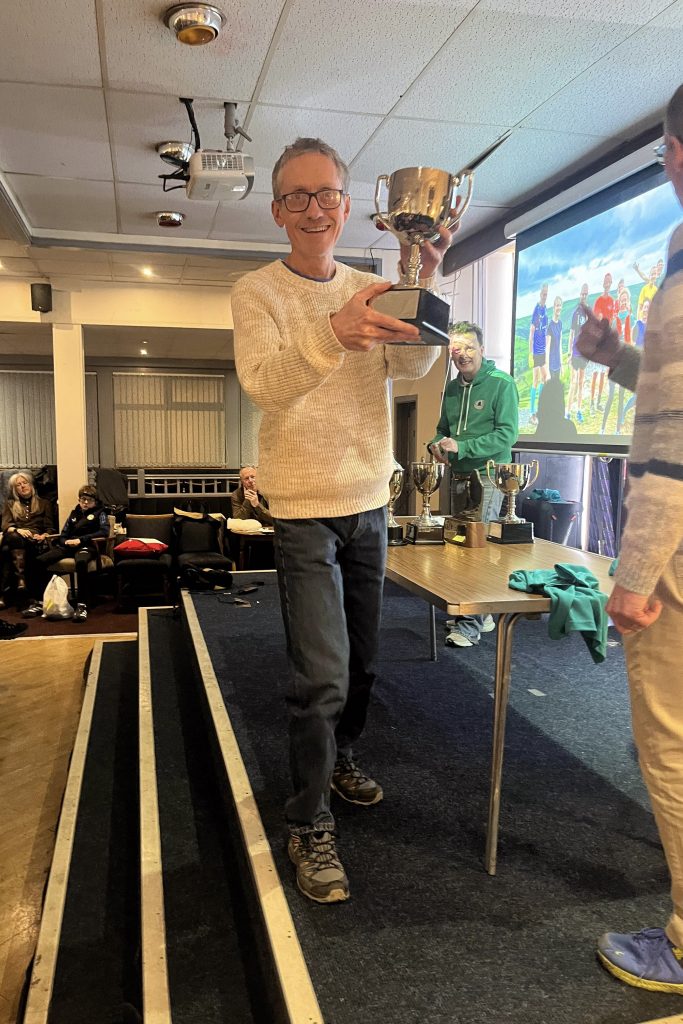
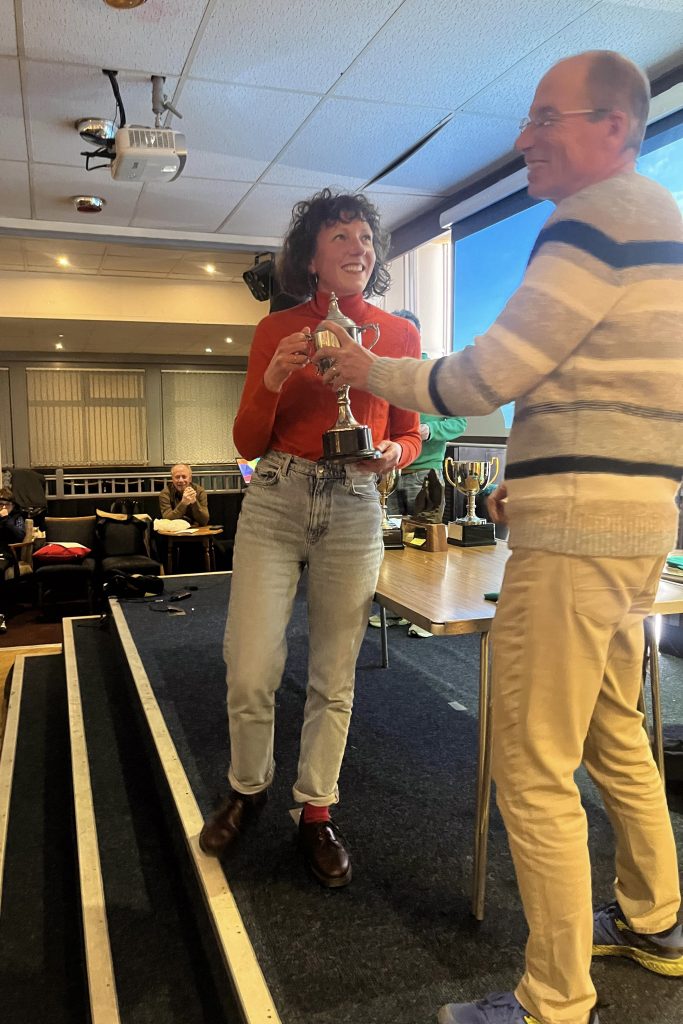
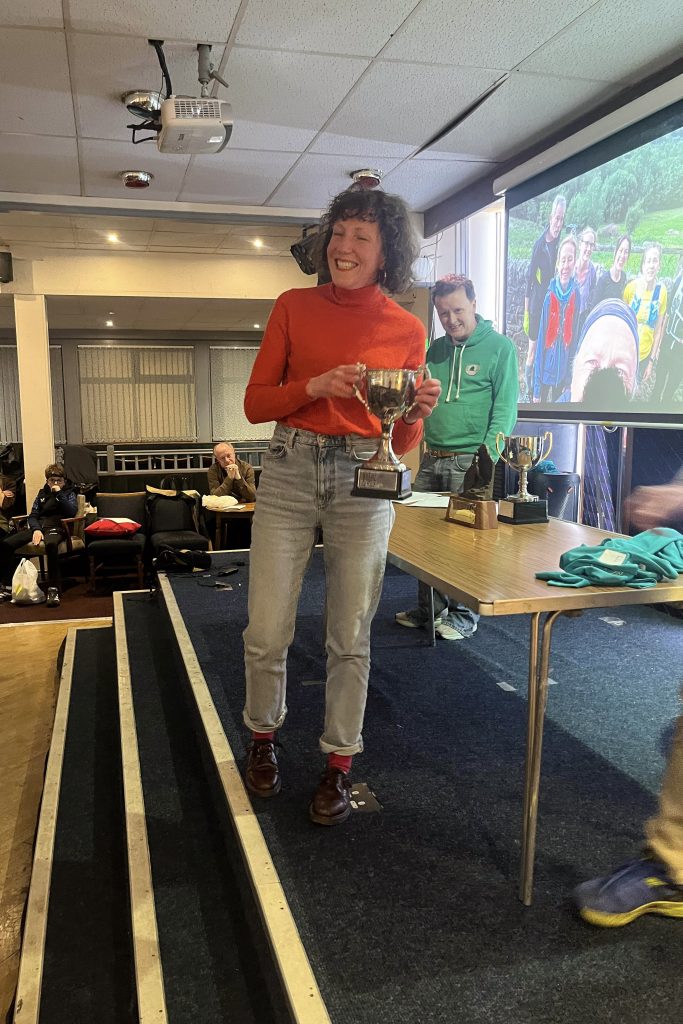
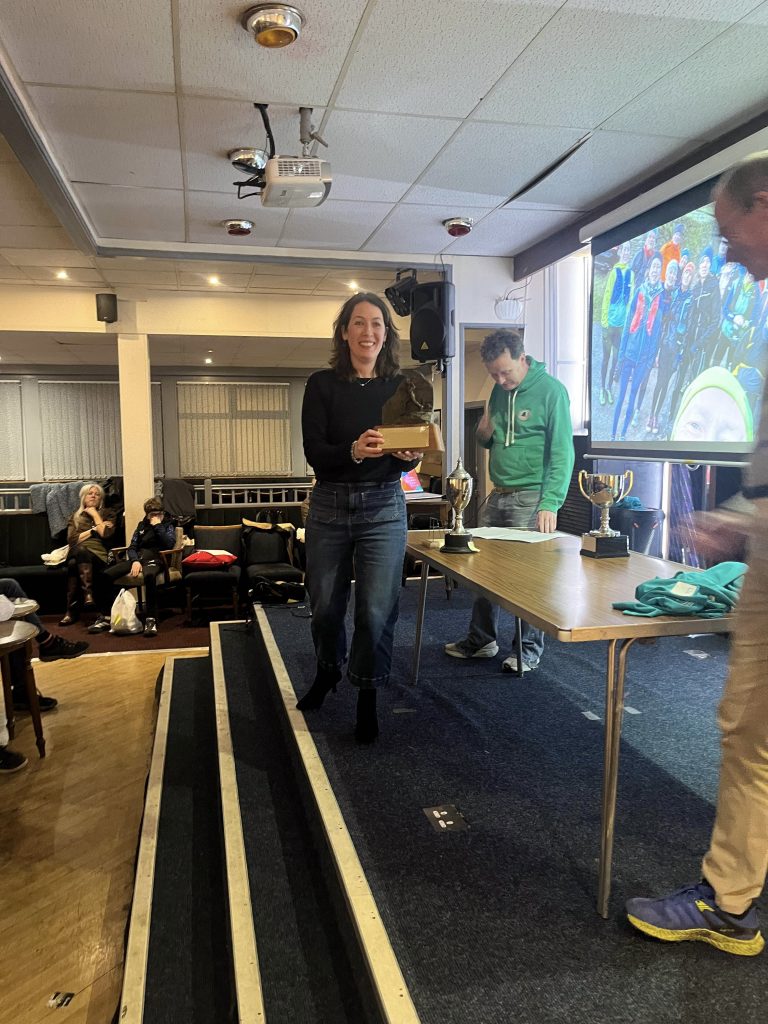
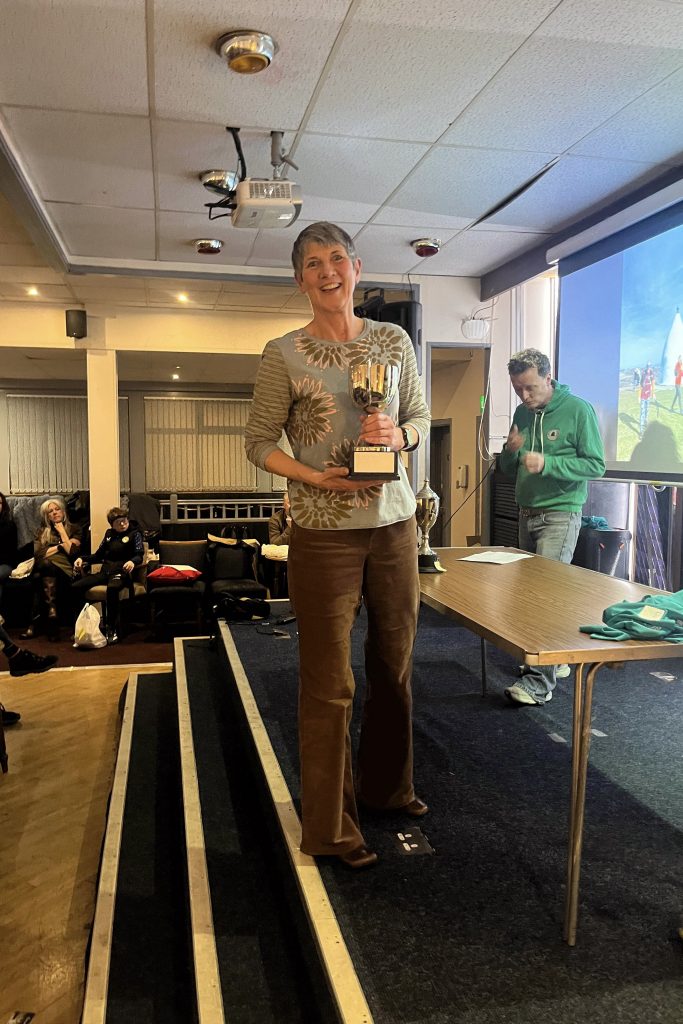
  • AGM 2026

    Photos: Chris Tetley / flickr

    Chairman’s Award

    • Julia Carter

    Keep on Running Award

    • Sue Holland

    Road Series

    • Men
      • 3rd Sean Adams
      • 2nd Lucas Jones
      • 1st Nathan Porter
    • Women
      • 3rd Ita Kelly
      • 2nd Mary Jones
      • 1st Bec Day

    Fell Series

    • Men
      • 2nd= Neil Colquhoun
      • 2nd= Wayne Grant
      • 1st Gavin Peach
    • Women
      • 3rd Clare Griffin
      • 2nd Liz Roberts
      • 1st Julia Carter

    Terry’s Race

    • Peter Rowe

    Main Champs

    • Men
      • 3rd John Moore
      • 2nd Lucas Jones
      • 1st Gavin Peach
      • V40 Gavin Peach
      • V50 Lucas Jones
      • V60 John Moore
    • Women
      • 3rd Ita Kelly
      • 2nd Julia Carter
      • 1st Liz Roberts
      • V40 Liz Roberts
      • V50 Julia Carter
      • V60 Ita Kelly
    • Overall
      • Gavin Peach
  • Age grading

    Age grading is something that may be familiar to parkrunners. Those percentages in the results that seek to level the playing field by comparing your time to the world record time for your age and gender. They give the example of four parkrunners: a 9 year old girl who finishes with a time of 29:15, a 23 year old male with a time of 21:30, a 65 year old man on 27:57, and a 75 year old woman with a time of 40:25. Although their finish times are different they all share exactly the same level of performance/fitness when age and sex are taken into account. To be specific, they all have exactly the same age-graded percentage of 60%.

    Our friends at Thirsk and Sowerby Harriers implement age grading in their own championships, and I thought it might be nice to do the same at GVS. For example, check out the results for Peak Forest, a →9.7km ↑247m fell race. The 1-2-3 using times alone was Gavin-Thomas-Lucas. But, taking ages and genders into account, the best performance was still Gavin, youthful Thomas falls right down the table, to be replaced by Moira.

    nametime#age grade#
    Gavin Peach44:45173.6%1
    Lucas Jones49:23371.3%2
    Moira Hunt69:431369.2%3
    Paul Barton51:50467.4%4
    Brian Holland62:541166.2%5
    Wayne Grant52:25566.1%6
    Thomas Penn47:26265.4%7
    Julia Carter61:591062.6%8
    Mary Jones65:031261.7%9
    Neil Colquhoun53:29660.6%10
    Anna Aspinall60:15759.0%11
    Liz Roberts61:18958.0%12
    Roy Whittle60:26857.8%13
    Elizabeth Gilmour78:151756.7%14
    Peter Rowe76:101555.9%15
    Paul Hunt69:441455.3%16
    Chris Tetley77:531652.4%17

    But how are these percentages calculated? Keep reading for the boring details.

    The Boring Details

    parkrun don’t publish the tables they use to calculate their age grading. What’s more, parkruns are all 5km. What’s even more, this was a gnarly fell race with some serious ascent. How can we get round these issues?

    How long (effectively) is Peak Forest fell run?

    Peak Forest is a 9.7km fell run, with 247m of ascent. Naismith’s rule of thumb would use the formula

    9.7 + ɑ ⨉ 0.247

    with ɑ=8 to say that this is an equivalent distance of 11.7km on the flat. But that formula would only apply to strictly uphill runs; in Peak Forest, there’s also 247m of descent. Hm. Up and down races, whilst not as hard as just up races, are harder than flat races. What’s more, gnarly fell races are much harder than their road equivalents. Somewhat arbitrarily, then, we’ll use the above formula with ɑ=8 (fell), ɑ=6 (trail) and ɑ=4 (road).

    But what’s the world record for an 11.7km race?

    parkrun don’t publish the tables they use to calculate age gradings. But World Masters Athletics do. For females and males, a variety of estimated world records are published for road racing distances from age 5 to 100, and 1 mile to 200 km.

    For example, Moira is [age redacted]. You can read across to see the estimated 11.3 km (7 mile!) world record is 46:22, and the 12 km world record is 49:38. WMA recommend extrapolating with

    u = (log 11.7 – log 11.3) / (log 12 – log 11.3) = 0.57

    46:22 ⨉(1-u) ⨉ + 49:38 x u = 48:13

    as the world record for someone of Moira’s age over 11.7km.

    And finally

    If we divide through Moira’s time into the world record time

    48:13 / 69:43 = 69.2%

    this is the age grading. It means that when the world-record holder finishes, Moira is 69% of the way around the course. Not bad!

  • Becoming part of the Spine Family

    (A bit more than a ‘Morning Run’)

    by Jen Parsons

    [originally posted at https://parsonsontour.travellerspoint.com/70/]

    It was July 2023 and I was umming and ahhing over whether to enter one of the Spine races. The Sprint caught my eye, but it was “only” 46 miles up the Pennine Way from Edale, and I wanted to try something I genuinely wasn’t sure I could finish. It didn’t take much of a nudge from my lovely (mischievous?) Goyt Valley Striders running friends to go for it – if they thought I could do it then why not? What’s “it” I hear you say? The small matter of a 109 mile race to the unassuming hamlet of Hardraw from Edale – the southern “half” of the Pennine Way. The Spine Challenger South. This would be my first official ultra and I wasn’t sure they’d let me in…but sure enough, a confirmation email came through that afternoon and the butterflies assembled in the pit of my stomach. Too late to back out now. In hindsight there are probably less extreme ways to get some time out from the madness of work and family life!

    Roll on a little under 12 months and I’ve dug my husband Chris and our two children Arlo (6) and Georgina (3) out of bed at 5:30 to drive the short hop to Edale for the start of the race. I thought I was a bit less nervous having already received the Lindley stamp of approval at kit check and handed over my drop bag the afternoon before. Two pre-race wees said otherwise. I marvelled at the range of rucksacks and race vests on display, some so light I mistakenly thought some runners had already arrived for the Sprint race starting later in the day. I was happy with my 5.5 kilos, although hoping that my choice of leggings and long sleeves would eventually be vindicated as we enjoyed some fabulous morning sunshine.

    The Lindley stamp of approval
    IMG_0386.jpeg

    At the race start in Edale on the 15 June
    PXL_20240615_065241369.jpeg

    Arlo and Georgina waiting to see me off
    PXL_20240615_065632666.jpeg

    I wouldn’t say my training for this race had been straightforward. I’d never had any running injuries to this point but the volume of miles took their toll, and a recce of Pen Y Ghent at Easter gave me my first taste of IT Band Syndrome. So much for bombing down the hills. I’d also had sinus infections through the winter and surgery on my nose in April to try and fix the problem once and for all. My body had had enough and the week before the race all I could think of was how nice it would be to have a glorious lie in on the Saturday morning. There had been some highs, such as the sparkly snow day I ran from Marsden to Hebden, and the weekend I nearly broke my running buddies over Bronte country to Gargrave, but when the countdown finally ended and we were off I couldn’t have been more relieved. My main goal was to finish the race in time for tea and bed on Sunday evening. But my initial goal was to get through Torside and Laddow rocks with my legs unscathed and then see what was possible. Given how the last two months of training had gone I had no idea if this was even achievable.

    A very sparkly Standedge, 17 January 2024
    IMG_0071.jpeg

    The first 10 Miles of the Pennine Way were very familiar to me, so I said hello to all my favourite rocks up on Kinder and tried to preserve my glutes having locked them up on the same stretch only a month before. I was firmly enjoying myself until we got to Torside when the rain started to fall, and my IT Band decided to say hello. It was a shame not to be able to let loose down the descents but it also wasn’t a problem yet. Laddow Rocks was a long old haul, and two slices of pizza later I began to get my rhythm back approaching Black Hill. My race very nearly ended right here though when my left leg disappeared up to my knee between two flagstones. Some four letter words may have been audible as the curlews scattered. My leg was still functional and an inspection of the damage would need to wait until Hebden Hey. Approaching the A635 I briefly contemplated a stop at the drinks van but a queue was forming and there was now so much water pouring off the hill that I decided it was a waste of both time and money. I did have to pick up some peaty run-off at Wessenden to top up my water supplies (I carried 800ml water with a filter and Aquatabs), but the lovely MRT guys at Standedge swapped it for drinking water before I needed a swig. Next stop: Nicky’s food bar where I had preordered veggie pasta.

    Leg preservation on Jacob’s Ladder..
    IMG_0439.jpeg
    IMG_0434.jpeg

    A fellow running friend who was also preparing to start the big race (full Spine) the following day had described the Challenger South as 5 meals out with a bit of running in between! Well this was meal #1, and what a surprise awaited me when I got there. My two wonderful friends Jenny (aka The Wren) Hutton and Claire Elsworth were dancing up and down waiting for me at the road junction. Best. Surprise. Ever. After a quick check with the Spine official I went in for full hugs. Happiness in spades. I sat down in the little oasis that is Nicky’s (a shipping container humming with food and grateful runners) and enjoyed some conversation with my fellow race “competitors” for the first time. The ice was well and truly broken as we dried off and refuelled. After a second helping of hugs I was on my way again buoyed all the way to Hebden by that wonderful surprise!

    I was 8 or so hours in and my legs felt good as I caught up with Helen Williams at Blackstone Reservoirs. We had been crossing paths since Torside and so we enjoyed some sociable miles in the early evening sunshine. I left Helen as we caught our first glimpse of Stoodley Pike peering over the horizon. Hebden Bridge was not far off. But I had been warned by Chris Tetley (a fellow Spine Challenger finisher) of the 4 miles to Hebden Hey. I enjoyed a fast descent down the track to the main road giving my watch it’s first charge on the go. Matched on the other side by an equally slow crawl up slimy cobbles on the narrowist of “paths”. Little did I know that the Pennine Way would stretch that definition to the max before Check Point 1. Think slimy stones embedded in slick mud squeezed between walls overgrown with vegetation and you’re getting somewhere close. Throw in a couple of poles, a bulky race vest and legs that have already seen 40 odd miles and it was just as well I didn’t have a swear box. Fortunately the Pennine Way cannot be blamed for the descent into Hebden Hey (dubbed “Hebden Hole”). I’m pretty sure this section has swallowed a few runners! 12 and a half hours done and Leg 1 was in the bag. Time for a shower and a change.

    Stil looking fresh at Snake Pass, Leg 1
    IMG_0436.jpeg

    I’d planned a 2-hour stop at Hebden to take a proper rest not knowing how tired I would be. There’s still 64 miles to go at this stage, way further than I had ever run. There were only about 3 other runners there when I arrived to a warm welcome and a roaring fire. I attempted to eat but had an altitude moment. Stomach wasn’t having any of it. In the end I managed some miso soup, yoghurt, crisps, cola and a choc pot. Having washed all the mud and sweat off in a gloriously hot shower and treated myself to a full change of clothes and shoes, I was ready to get stuck in again.

    It was just getting dark as I left, a beautiful clear dry and cool night ahead. Helen Williams left the checkpoint with me and I caught Kate Simpson up as she made a call home on the road back to the Pennine Way. Kate and I grouped up as we approached the moors above Gorples Reservoir and headed up through Bronte country. I had decided to walk through the night to give my stomach a rest but we both felt good and really got a move on past Top Withens and the half-way point. I stopped to preempt a blister, and then left Helen and Kate behind as I headed towards Ponden. I thought of them both as I nipped over a wall and dropped into a field before the steep climb up over to Ickornshaw. When I looked up I was greeted by the largest horns I’ve ever seen on a set of cattle. “Just coming through” I half whispered as I tiptoed past the snoring beasts!

    Ickornshaw Moor was wonderful until the last section of descent where it can only really be described as “bog-slide”. I still felt great and chuckled at the cheeky signs that had been attached to the gates to get us through this middle part of the race: “Remember, you paid for this” and “Jasmin was probably in Hawes by now”. I was happy, I was approaching Cowling where the tri club had set up an unofficial checkpoint when I was greeted by friendly torchlight and escorted to a very cosy seat in a large tent and discovered I was actually hungry! The walk had done the trick and a very happy stomach said hello to a mushroom roll, some delicious melon and soup. It was only a quick pit stop and as I left Cowling the first inkling of dawn could be seen to the East. I’m coming to terms with the fact that ultra running is definitely a pasttime of deep contrasts. I’ll never forget the beautiful rays of dawn sunshine and curlews over Elsack Moor that morning, nor unfortunately the reaction of my gut to an early breakfast. The race was on: to the next bush! As the wonderful medic explained at CP1.5, with all your oxygen going to your legs, there’s nothing left for digestion, and the body sees to the rest no matter how inconvenient…

    The next few miles were uneventful. I made a quick stop at the tuck shop at Thornton-in-Craven for some chocolate milk, and donated some of my race food (which I judged I wouldn’t be able to eat) to save carrying the extra weight. I then headed for Gargrave. The mudfest that I’d dragged my running friends through earlier in the year was mercifully dry but had now become a cowfest. Thankfully, while it felt like midday to me, it was still early morning and the cattle were getting some shut-eye. By this point I was running behind my schedule (although, it’s almost impossible to judge what a 109-mile race schedule should be when the furthest you’ve been is 30 miles). So Gargrave Co-op was on! Hot greasy food beckoned. I had no idea where I was in the race at this point, but it was clear I was far enough down the pecking order for pizza to be off the menu. Cheese and onion lattice it was, and It. Was. Heaven. My water had started tasting bitter on the approach in, and my pain au chocolate had been firmly dispatched to the bin. Freshly cooked crispy fat it turns out, was the answer. Some form of cheese pastry will always have a place in my race vest in future ultras…

    Just a 10k to Malham but another race to the loo beckoned. I was in the guts (literally) of the race now. 60-70 miles in and it was beginning to get hard. I needed some water, my feet had swelled and I needed to change socks to reduce the pressure in my shoes. My hands needed a wash, I was hot and sweaty in the sunshine, and well, a “proper” toilet was the order of the day. It wasn’t in my plan to stop in Malham, so I’d keep my friends and family guessing as I took a break and set myself up in the covered picnic area by the public toilets to sort myself out. As I smugly pulled my dry socks on it duly started to rain. Now everyone knows that a rain slicked well-worn limestone pavement is just what you need at 80 miles in! Fortunately for me Rob Hornshaw had caught me up while I was stopped and we walked together over Malham Cove discussing ultras and marvelling at those who take on the 160 mile Challenger North race and the full Spine. It wasn’t long before we were striding out to the medical checkpoint (CP1.5) on the far side of Malham Tarn. I arrived as Allie Bailey was leaving (her book was awaiting me at home) and I was surprised to be in such experienced ultra running company. This was my first inkling that my race wasn’t going too badly. David Keane came flying through the checkpoint as though he was in a different race altogether. My only thought was to wonder where he’d been up to that point! I’ll be forever grateful for the lovely medic with the broken ankle asking me how I was and if I had any problems. I didn’t think much of it at the time but mentioned in passing my gut issues and she suggested some immodium which sorted me out for the rest of the race. I very nearly didn’t take up her offer but as much as I love a scenic loo, I needed to eat and retain the energy for my legs. Also, the organic apple porridge I had just I inhailed was starting to take effect. Very. Good. Decision! I was only in CP1.5 for 12 minutes and left in good spirits. Comin’ attacha’ Fountains Fell!

    Now no ultra experience is complete (so I’m told) without the odd hallucination, and not having slept at all, my mind was beginning to play tricks. Did you not know there is a naked man and a snogging couple on the way out of the checkpoint at Malham Tarn? The naked gentleman turned out to be a sculpture of a hare. The couple in an embrace I genuinely have no idea about, only a vague and puzzling recollection that they were there on the previous occasion I had passed through at Easter, having had ample sleep! Random rocks looked like bears and the odd runner but then turned back to rocks upon closer inspection. This continued on until the finish.

    Fountains Fell was lovely in training and I had skipped over it in quick time. But after 80 or so miles, the war of attrition between my IT Band and my stash of paracetamol was finally coming to a conclusion. The angle of ascent and descent on Fountains Fell was nothing short of incremental torture and so with some alliteration “F*^%#=* Fountains Fell” was forever renamed! In my mind there was no doubt I was finishing this but I did have to give myself a good talking to as I turned my left ankle over in another bogslide descent. Only two more biggies to go: Pen Y Ghent (also renamed) and the Cam High Road which I was actually looking forward to as it offered the chance to straighten my left leg and stride out the last 15 miles.

    The view from Fountains Fell across to Pen Y Ghent at Easter. Neither required renaming at this point!
    IMG_0192.jpeg

    Rob caught up with me again as I refilled my water at the Ladies Toilets in Horton. We were met by the lovely Spine team there who helped bring the super-soaker tap under sufficient control to avoid donning full waterproofs. Unfortunately this distraction meant I left my new Montane gloves sitting on the window ledge. It was 5 miles up the Cam High Road before I realised. Funnily enough I did not turn back.

    15 miles doesn’t sound like much but at the end of a 109 mile race that’s 5 hours of hard graft still to go. It felt unimaginable at this point. So I stopped imagining and just put one foot in front of the other. About an hour up the track the Great British Weather rejoined the party. I added layers and waterproofs, struggling to generate enough speed and heat to remain comfortable. The rain became heavier and the wind picked up so I decided it was time to get the hell out. Rob had dropped behind and I started to get a proper shift on, into a rhythm with my poles. It must have been hours but I disappeared into the howling wind, fog and sideways rain of a Cam High Road timewarp. It didn’t feel like long before the last giant sponge of Ten End loomed and I was finally headed down into Hawes; but not without some comedy moves to remain upright I should add. Bog? What bog…?

    I was racing the dusk at this stage and was very happy to spy a lone umbrella waving at me from the road – my husband Chris who had decided against surprising me on the Cam High Road (good decision) had managed an intercept. We chatted as I marched on, and I was forced to take the only detour of the entire race as a field of very boisterous bullocks (try saying that after a few) blocked the route to the houses on the edge of Hawes. No way was my race ending in a trample 2 miles from the end! Having recce’d this section it was easy enough to skirt round the houses and rejoin the Pennine Way from the road. Chris left me to scoot off to the finish line while I knocked out the last two miles – the only section I hadn’t recce’d. At this point my watch had run out of battery, my charger was dead, and my phone decided this was the moment to run out of juice. No GPS track. I thought of asking at the campsite for directions, then realised no one would have a clue about 150 mad runners incoming to Hardraw in the half light. If you were wondering why I meandered off-route so close to the end, this is why. However, I was lucky that I’d traced the route on the map and talked it through several times with Chris Tetley only a few weeks before, so in the darkness, from memory I found my way; Chris’s words echoing in my brain at each path junction.

    Now, I was pretty convinced my body was no longer capable of running having tested this on several occasions at around the 70-mile mark. But it’s amazing what it can do knowing the end is in sight. I’m sure this is adrenaline, but the last mile felt like the first, running freely to the lights of the campground in Hardraw. I was ecstatic to see the official arrows pointing me in the right direction. Without the security of the GPS track on my wrist it felt like I’d found a needle in the proverbial haystack. One last “sprint” and I did a finishing twirl across the line. At points in the race I’d thought I’d just cry at the finish, but I simply felt happy, strong and unbroken as I received my medal. I was unprepared for the finish line interview however, and struggled to marshal any thoughts on what the “good bits” of the weekend were after just sliding off Ten End after 5 hours in the godforsaken “British Weather”. My only thought was to get some dry clothes on…and then my stomach rumbled!

    Over the finish line! I’m clearly relieved!
    IMG_0437.jpeg
    IMG_0438.jpeg

    Two final surprises remained, the Check Point 2 team presented me with a printout of all the amazing messages friends and family had sent me along the route via the tracking system. It stretched from my shoulder all the way to the floor. I was gobsmacked. This was the most wonderful thing and something I’ll treasure forever. The second surprise was that only 25 people had finished ahead of me, and only 6 of them women. Unbeknownst to me as I racked up the miles I’d managed to produce a Top 10 finish in my first ultra in a time of 38 hours and 36 minutes… A marvellous bowl of chill, followed by cake and custard was duly dispatched: I had made it in time for “tea” and a very comfortable hotel bed in Hawes.

    My medal, certificate and finishing position
    42D529EF-590C-4D96-9BF5-E723889AB435.jpeg
    7292E045-6DDB-4D83-AC6C-C6782192B2EA.jpeg
    49AF01BA-D8C0-4F47-BE16-D575F45092F6.jpeg

  • UTS 100K

    UTS 100K

    Robin Leathley writes:

    3 a.m. The alarm goes off on my phone. Finally, the day has arrived: Ultra Trail Snowdonia 100K. I had trained for six months and somehow stayed injury-free, an absolute miracle! Previously, I’d struggled with Achilles tendonitis and various hip twinges. During the taper, both had flashed warning signs, but I’d experienced phantom pains before and cursed my mind for being so cruel.


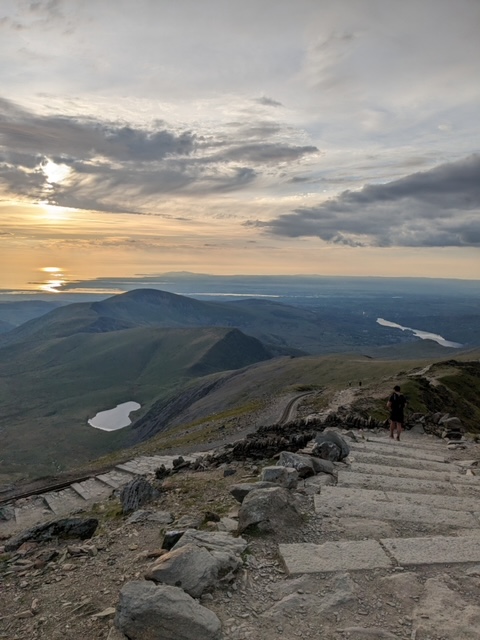
    Before I knew it, the countdown had finished, and we were off at 4:45 a.m. Heading up the Llanberis path, it was warm but clear. Most people walk the majority of the path up to the Bwlch Glas. I chose to do the same, determined not to start too fast in my first-ever 100K race. Perhaps more challenging than other 100K races, this one has 6,400 metres of climbing. To most people’s astonishment, I was doing it without poles. Many expressed genuine concern at my decision. I was asked a few times, “What races have you done in the build-up?” The only race I could recall that came close was The Bullock Smithy. “It was 93K with 2,500 metres of climb, no, near enough 3,000!” I said nervously. Little did they know, I did this four years ago now but I didn’t want them to worry. I knew I’d had a really strong training block and just needed to believe in myself.


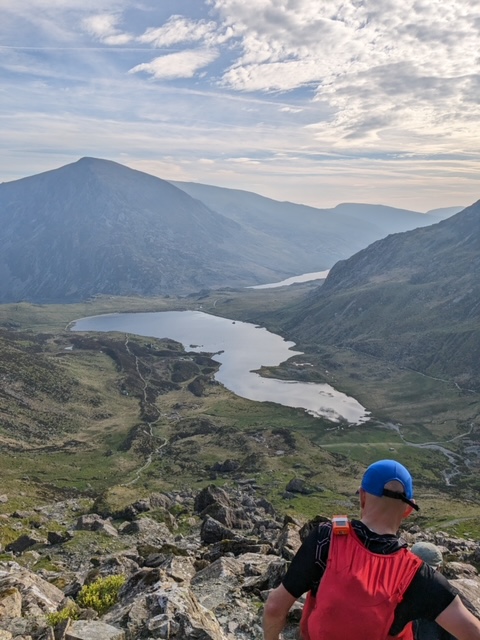
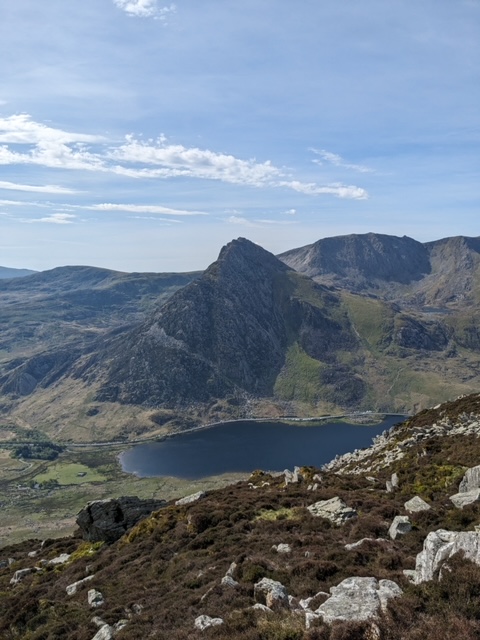
    I made it up to Bwlch Glas (988 metres) in 1 hour and 15 minutes, a bit slower than anticipated (this would become a theme). You’re then directed onto the Pyg track, and as usual with Snowdonia, it was filled with tourists, even at 6 a.m. Navigating down the rocky steps and stones of this path is a pain, and you descend 600 metres in a short amount of time. I was very wary of how my quads would handle this race, so I walked a good bit of the steps and tried my best to ignore the people bounding down around me. Play it safe, Robin, play it safe; there’s a long way to go.


    At Pen-Y-Pass was one of many amazing aid stations throughout the route. I filled my water again, another 1.5 litres, and carried on up Glyder Fawr (980 metres). There is a little scrambling on this section but nothing too tricky, though not something you can practise outside of the mountains. The descent down Glyder Fawr takes you through the “Devil’s Kitchen,” where you pick your way down rocks and steps again, but even slower this time. Average pace for this race gets completely thrown out the window. There’s then a lovely path alongside a lake, and you ascend a path around the side of Tryfan (Bwlch Tryfan, 726 metres). It looked glorious that day, but I didn’t want to waste time staring; the next aid station was just down the hill!


    There was a huge roar of applause at the next aid station at Glan Dena, the first checkpoint that allowed your support crew. I didn’t bring one, but the extra bodies welcoming you in made a difference, and you really needed the lift before the next, arguably hardest, climb. The heat was starting to get through now. It had only been 24 km, but I’d been out for nearly five hours already. I knew I was on course for 20-22 hours; I just needed to keep moving forward! This climb tops out on a ridge with Carnedd Dafydd (1,044 metres) and further on Carnedd Llewelyn (1,064 metres), only 22 metres shy of the summit of Snowdon, so it’s no joke getting up there! The sharp rocks scattered across the trail mean you have to keep your focus. I met a guy up there who looked like he was having a hard time. Questioning why he’d signed up for this race, I tried to encourage him, telling him he’d done the hardest climbs already, but he was on a real low. I learned he’d done no elevation training for the race whatsoever—absolutely crazy! I told him he’d done bloody well to reach this point and that the next bits were easier. I wish I’d taken his number to see if he finished, but I didn’t. Mystery man, I hope you finished.


    The next sections off the ridge were much easier, onto the first bit of flat ground to a nice lakeside trail. Two guys with a freezer bag full of ice had freeze pops earlier, but I wasn’t quick enough. I waved past them, not really listening to what they said, only to find out later it was Gary House and Robbie Britton (24-hour distance British record holder). I was gutted to learn later I’d ran past one of my personal heroes. Goodbye Gary. The next sections weren’t so hilly, and I made it down to the 50K halfway checkpoint at Capel Curig with the help of a bit of pizza.


    Upon descending into the checkpoint, a kid on a wall shouted my race number down the trail, “1299!” A further “1299” echoed down the zigzag path. When I reached the bottom, a cluster of kids in “Trail Fam” t-shirts shouted, “Give me an R, Give me an O, Give me a B, I, N! ITS ROBIN!!” and then erupted into applause. It was such a beautiful moment; I was completely taken aback and nearly cried. I’ve since looked up Trail Fam, and they do such lovely charitable work in getting people outdoors. I’ll be trying to raise money for them in the future after this unforgettable memory. It really is the small things in these long races that stick with you.


    At halfway, I changed my socks and t-shirt, restocked food and drink, and left after about 20 minutes. It should have been shorter, but I really needed to gather myself after that seriously tough first 50K. I left reminding myself to just keep going. Time wasn’t a factor anymore; I could pretty much walk the rest of the race and make it through the cutoffs if I needed to.

    Up Moel Siabod (872 metres), I met a couple of guys who were a great laugh. I wish I could have stuck with them for the entire race, but I was moving a little better now and wanted to capitalise on it while I could. The climb up Siabod is tough but straightforward. You can see the top of the hill early; you just have to keep striding. I had nailed down my walking-with-hands-on-thighs technique by this point and was so proud to have reached over 4,000 metres of elevation—more than I’d ever done! At the top of this mountain, I began saying to myself, “You can do this, you can actually do it!” Still, I restrained myself on the long grassy descent to the next checkpoint. I wanted to stay in complete control. I’d listened to dozens of podcasts on ultras, about how things can go wrong at any minute, whether it be cramps, stomach issues, injuries, etc. Control the controllables, I thought.


    After the next checkpoint at 63 km, I teamed up with another runner, Alex Holt. This is where the race turned on its head. I’d been plodding along the first two-thirds of the race, tentatively picking through the terrain, with the target of completion and nothing else. I wanted the stones; I wanted to enter UTMB, the ultimate trail race. For the last third of the race, however, I felt bold, strong, fresh even! Running and chatting with Alex had completely distracted me from the 40 miles I’d already covered. We charged through the course, passing people left and right, marching up the back of Snowdon to the summit faster than I could have ever imagined. I kept looking down at my legs thinking, “Are you sure?? Can you honestly keep this up??” I couldn’t believe my training had been this good. Had I underestimated my ability on this course completely?


    It didn’t stop there. We flew down the Ranger path off the top of Snowdon (1086 metres) to the 50-mile/80Km checkpoint. With a quick changeover of food and drinks, we didn’t waste much time. Earlier in the race, I’d been crushing ready salted crisps and pouring them into my mouth to hold off cramps, but I hadn’t felt a twinge in ages. I truly think the distraction and competition with Alex had pushed me to new heights, to the point that my body believed in me more than I did!

    There were only two more mountains left to conquer before the final descent into Llanberis: Mynydd Mawr (698 metres) and Moel Eilio (726 metres). Wrapped up in deep conversation, we chatted through the next 10K into the darkness and finally turned on headtorches. Alex began to pull away on this next descent, which was pretty tricky with rocks, tight trails, and the beginnings of bogs. I had to let him go. “Run your own race,” “Don’t do anything foolish now,” so many sayings from the countless hours of lessons I’d listened to, ringing in my ears.


    Upon reaching the final checkpoint at 90K (on my watch anyway), I told Alex to go on ahead. “I can’t keep up with that pace; you go on ahead.” His reply was, “Do you wanna give it a try?” I looked up and with very little hesitation said, “No.” He, myself and the volunteers all laughed.

    I pretty much pushed him out the door while I tried to find anything that my stomach could hack, but all I could face were chocolate digestives. Spoiler alert: they did the trick. Navigating the forest and boggy trails of the next section wasn’t easy, but I was struck with such a free feeling. I’d reached the final section! I was going to do it! I was going to finish my first 100K race—and not just any race, a bloody hard one at that! No poles. Hours of hard training, regardless of the weather. I’d been ruthless in making sure I put the work in. I actually shouted out upon reaching the final hill, “I’m going to do it! I’m going to do it!!” I held back tears and was determined not to break. I wanted to finish this strong. I wanted to do myself proud. I charged up Moel Eilio and even faster down it, all the way back to Llanberis. I passed 15 people in this last 10K; I was just so excited to finish.


    One kilometre from the end, I passed someone else and felt them surge behind me. Did I really want to fight even harder for one more position? He came up alongside me, and before I tried to muster another gear, I realised it was Alex. It was such a surprise to see him; I’d assumed he’d finish 15 minutes before me, but I must have crushed the downhill to have caught him. It was a real joy to finish the race with him, and we ran it in together. It felt like the perfect finish to the race. I crossed the line and stood in disbelief for a moment as they put the medal on me. I’d done it—I’d completed the Ultra Trail Snowdonia 100K. I gave my brother a huge hug and pretty much collapsed on a bench.


    I would say that I can’t believe I did it, but I always knew I could. My belief in myself never wavered in this race, and when facing a course as tough as this, you need that kind of mentality. What surprised me was how well my legs handled the climbs and descents—who knew they had it in them! They say you learn more from your failures, but I learned so much about my body in this race, and I won’t forget it. For my next ultramarathon, I’m going to hit it a bit harder. Let’s see how much it can take. The Bullock Smithy, let’s be ‘avin you.

  • GVS Do’s and Don’ts

    Roy Whittle (Club Secretary) writes:

    If you are new to running or have just joined the club this may be of interest to you. 

    Running is one of the purest & simplest forms of exercise there is, however because humans are often complex and diverse creatures the social aspects can be a little harder understand or to follow. 

    Here are my top tips: 

    • Most runners (that I have met) are a friendly bunch and usually only too happy to chat about the last parkrun they did, the next race in the club calendar or how good the cake was at the race feed stations. If you are stuck for conversation, start here!
    • The club often runs in up to four groups of differing abilities and will wait for the last runner in each pack at a convenient point such as a stile or road crossing etc to regroup and will match the pace as best they can to the last runner.
    • If you are ahead of the pack and feel able to, please consider doubling back to meet the last runner. If you feel the group you are in are going too fast- tell the leader. They will happily adjust the pace to suit- it’s supposed to be fun after all.
    • If you are leading a run, or are the first runner in the pack, please stop at junctions to make sure that everyone knows what direction you will be heading in. 50 metres after the junction may be out of sight for slower runners in the group and not everyone in the group will know the full details of the route.
    •  If you start to feel unwell part way into a run or feel you can’t run at the pace of the group- don’t worry, tell the run leader, they will shorten the route, adjust the pace or divert. Don’t feel embarrassed to ask, everybody would rather cut a route short knowing you got home safe and enjoyed the run.
    • If you are running as part of a group and you are about to divert for a wild wee or take a shortcut home please tell someone so you don’t get left behind or we have to start a search for that missing runner! (I learned this the hard way)
    • Kit- Dress appropriately for the weather conditions. Most of the Tuesday & social runs are primarily trail and off-road oriented so expect mud or bog in the winter months and mud or bog in the summer months, it is the Peak District after all!

    The FRA (Fell Runners Association) stipulate a minimum level of kit each runner must carry during their races, it isn’t much but is just enough to delay the onset of Hypothermia should you become injured.

    For some short fell races you need nothing more than a pair of suitable shoes (usually “fell shoes”, with an aggressive rubber stud pattern), basic running clothing and a couple of quid for the entry fee.For longer races you will be required to carry mandatory kit. This will mean full waterproofs (with taped seams), hat and gloves, a map of the course, a compass, a whistle and some food. For some races, especially in winter, the Race Organiser may stipulate additional requirements such as an emergency “bivvy bag” or extra thermal top. This equipment is for your safety: the weather in the hills can change rapidly, and it is vital that you are properly prepared for a situation in which you become lost, heavily fatigued or incapacitated owing to illness or injury. The mandatory kit is the bare minimum, and runners are encouraged to carry additional kit depending upon the conditions and their experience.

    https://www.fellrunner.org.uk/faq/frequently-asked-questions#kit

    Carrying just these basics (or your own selection of kit) on a club run, while not mandatory is a good idea, especially during the colder months. I always carry a waterproof top, bivvy bag & small first aid kit for most Tuesday club runs and then add/remove items depending on the weather conditions. Kit is a personal choice so carry what you think you might need.

     If the worst does happen and someone gets injured enough to need emergency treatment or rescue it is useful to know what to do to call help.

    Make a note of all relevant details:

    • Location (with a grid reference if possible)
    • Name, gender and age of casualty
    • Nature of injuries or emergency
    • Number of people in the party
    • Your mobile phone number

    Dial 999 or 112, then ask for ‘Police’ then ‘Mountain Rescue’. Give all your prepared details of the incident and stay where you are until contacted by the rescue team.

    If you have to make a further 999 call, follow this procedure in full again.If you have hearing or speech difficulties, you can contact the 999 emergency services by text. You will only be able to use this service if you are registered with emergencySMS first, so register now — don’t wait for an emergency! Text ‘register’ to 999 then follow the instructions sent.

    In an emergency, contact the emergencySMS service by texting 999. Your message should include ‘Police’ + details of incident + location.

    Mountain Rescue England & Wales

    Above all, have fun and be safe.

  • Winter Half Tour of Bradwell

    Photos

    Results

    Robert Nock2:41:57
    Johnathan Cooper-Knock2:45:48
    James McGill3:35:11
    Paul Hunt3:50:37
    Ivan Whigham3:50:52
    Roy Whittle3:50:56
    Wayne Grant3:57:07
    Eddy Webb3:57:22
    Bec Day4:10:51
    Julia Carter4:26:35
    Chris Tetley4:27:51
    Stuart Keen4:34:54
    Claire Elsworth4:44:09
  • Hit The Trail

    Hit The Trail

    Chris Tetley writes:

    So it begins, the 2024 championship season, well apart from parkruns. Hit The Trail was the first full race of the 2024 season of championship races. Twelve of us turned out for this five-mile trail race on a chilly Sunday morning.

    The race runs along trails through the Reddish Vale country park just outside Stockport. They warned us it might be muddy in places, and it didn’t disappoint. They also mentioned the odd “puddle” or two and yes there were a couple of sections that had been flooded. Can I say the second one was particularly cold. Still, it washed the mud off our shoes, and we soon warmed up on the uphill finish.

    Results

    John Moore35:041st V60
    Wayne Grant36:16
    Brian Holland37:461st V65
    Roy Whittle40:06
    Mary Jones42:33
    Paul Hunt43:21
    Ita Kelly43:041st V60
    Christine Bowen46:30
    Claire Elsworth47:52
    Stuart Keen47:47
    Chris Tetley48:46
    Jane Keen57:24
    Emma Martin59:09

    Thanks to Jon-Paul Kearns for the pictures

  • Hypothermia

    Hypothermia

    Roy Whittle

    As we are now in the middle of winter, just past the shortest day (21st December) and with the coldest weather probably yet to arrive it is probably a good time to refresh our knowledge on how to avoid the effects of the cold when out on a run and what to do if you or someone else is suspected of showing signs.

    The official term is Hypothermia. This is when the body loses more heat than it can generate, usually when body temperature drops below 35 degrees (normal temperature is 37 degrees) and it can be lethal if not acted upon quickly.

    Symptoms of hypothermia include:

    • shivering
    • pale, cold and dry skin – skin and lips may turn blue or grey (on black or brown skin this may be easier to see on the palms of the hands or the soles of the feet)
    • slurred speech
    • slow breathing
    • tiredness or confusion

    Now is the time to act: Get help from anyone you can in the vicinity or call 999 or 112. Put on extra layers. Eat or drink something sweet. Move to a sheltered position if possible. If you are helping a casualty, make sure you protect yourself from the cold by putting your own layers on.

    Making sure you wear or take the correct amount of clothing with you is important and the type of run you are doing has an impact on this choice.

    If your route choice is a short local run around the housing estates on roads & footpaths then you may decide that just the clothing you are wearing will be adequate as you are only a short hobble from home in the event of a twisted ankle etc.

    If for example your run is up into the hills, several miles from home then it would be sensible to consider taking extra kit (see FRA kit advice below) as well as letting someone know your route and expected arrival home time as a twisted ankle out in the hills might cause you to cool down rapidly thus increasing the risk of hypothermia.

    Some good advice produced by the FRA and Mountain Rescue is linked below:

    The FRA (Fell runners association) have produced a simple guide aimed at runners, the link is here.

    Often Hypothermia is linked to not wearing or carrying the correct kit for the conditions which is why the FRA insist on minimum kit requirements for entry into their sponsored races, the minimum kit link is here.

    What to do in the event of an emergency (general guidance) here.

    Buxton Mountain Rescue hill safety advice here.